
World Heritage Cities in Spain you should visit
World Heritage Cities in Spain: history, culture and essential destinations
Spain is one of the countries with the highest number of cities declared World Heritage Sites by UNESCO. Its enormous historical and cultural diversity has made it possible to preserve some of Europe’s most impressive urban ensembles, where Roman remains, medieval architecture, Islamic heritage and great Renaissance and Baroque monuments coexist.
Exploring these cities means travelling through centuries of history via perfectly preserved old towns, monumental squares, cathedrals, walls and streets that maintain much of their original identity.
Toledo: the city of the three cultures
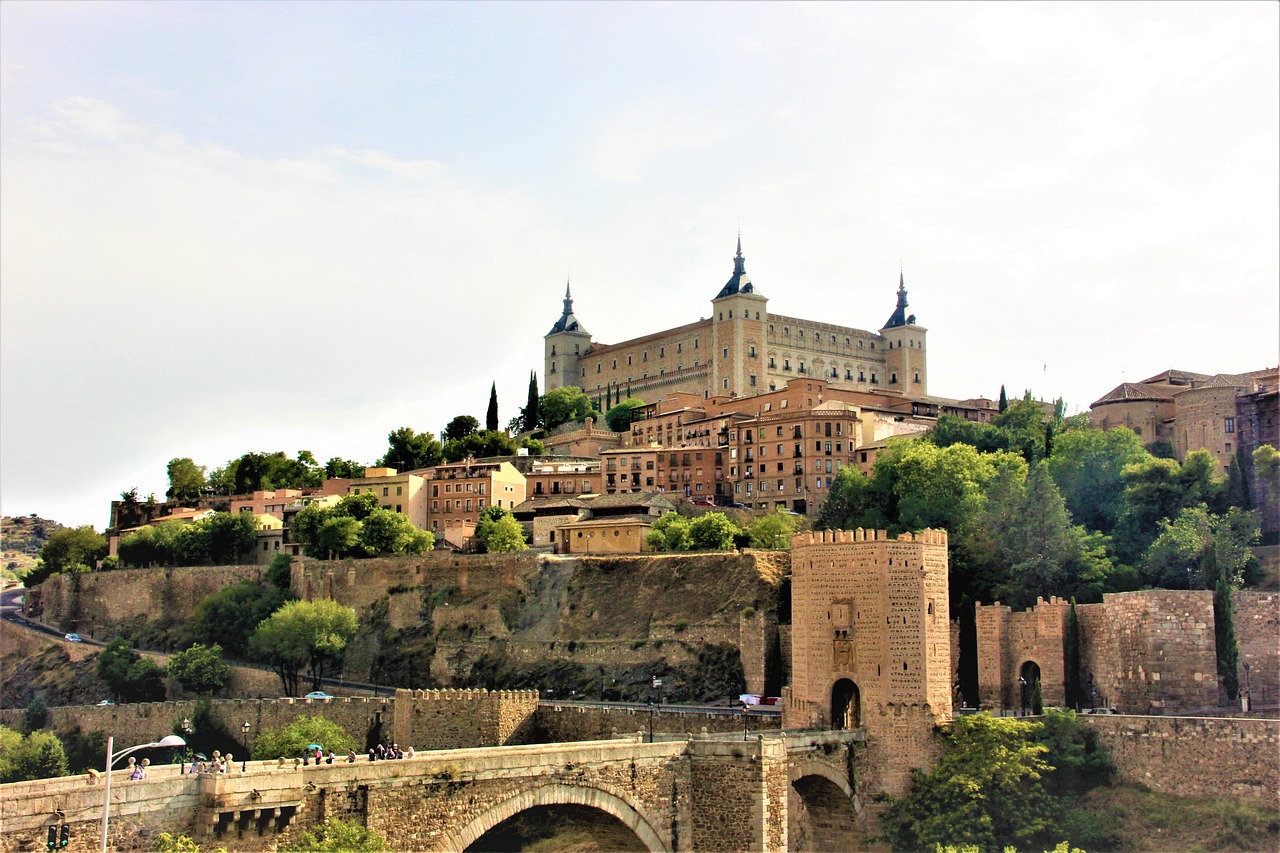
Toledo is one of Spain’s most important historic cities. Its heritage reflects centuries of coexistence between Christian, Jewish and Muslim cultures, something visible in its architecture, monuments and medieval urban layout.
Among its main attractions are:
- The Primate Cathedral.
- The Alcázar.
- The historic synagogues.
- The medieval walls.
- The viewpoints over the Tagus River.
Santiago de Compostela
Santiago de Compostela is one of Europe’s great cultural and spiritual destinations thanks to the Camino de Santiago and its impressive historic centre.
Obradoiro Square and Santiago Cathedral form one of Spain’s most recognisable monumental ensembles.
The end of the Camino de Santiago
Thousands of pilgrims arrive every year in the Galician capital attracted by its historical heritage, university atmosphere and Atlantic gastronomy.
Salamanca
Salamanca stands out for possessing one of the country’s most important Renaissance and university ensembles. Its historic university turned the city into one of Europe’s major intellectual centres for centuries.
Plaza Mayor, the cathedrals and the golden-stone façades form part of one of Spain’s most beautiful urban landscapes.
Ávila and its medieval walls
Ávila is internationally known for preserving one of Europe’s best-preserved medieval walls.
The walled enclosure completely surrounds the historic centre and makes the city one of the best examples of Spanish medieval urban planning.
Segovia
Segovia combines some of Spain’s most famous monuments within a single city. The Roman Aqueduct, the Alcázar and the Cathedral form an exceptional historical ensemble.
Its proximity to Madrid has also turned it into one of the most popular cultural getaways in central Spain.
Córdoba
Córdoba is home to one of the world’s most important historic centres thanks to the Mosque-Cathedral and the Andalusi heritage that still defines much of the city.
The Jewish Quarter, traditional patios and white streets make Córdoba one of Andalusia’s most visited cultural destinations.
Cáceres
The historic centre of Cáceres is considered one of Europe’s best-preserved medieval and Renaissance ensembles.
Its palaces, towers and historic squares create a unique atmosphere that has even served as a filming location for numerous audiovisual productions.
Cuenca and its Hanging Houses
Cuenca stands out for its spectacular location between gorges and for its famous Hanging Houses, suspended over the rock.
The combination of nature and heritage makes this Castilian city one of Spain’s most distinctive urban destinations.
Alcalá de Henares
The birthplace of Miguel de Cervantes, Alcalá de Henares possesses one of the country’s most important historic university ensembles.
Its university and old town represent a Renaissance university city model of enormous historical value.
Ibiza and Dalt Vila
Beyond its beaches and nightlife, Ibiza preserves important historical heritage led by Dalt Vila, the fortified city overlooking the bay.
The Renaissance walls and cobbled streets offer a different image of the Balearic island.
Baeza and Úbeda
These two Andalusian cities form one of Spain’s most important Renaissance ensembles.
Their squares, palaces and churches reflect the artistic splendour of the Renaissance in southern Spain.
San Cristóbal de La Laguna
Located in Tenerife, La Laguna stands out for its colonial urban layout and for having served as a model for numerous Latin American cities.
Its historic centre preserves churches, convents and traditional buildings of enormous heritage value.
The most visited World Heritage Cities in Spain
Among the Spanish cities receiving the highest number of visitors thanks to their heritage recognition are:
- Toledo.
- Santiago de Compostela.
- Córdoba.
- Salamanca.
- Segovia.
- Ávila.
- Cáceres.
- Cuenca.
Spain, one of the world’s great heritage destinations
Spain’s World Heritage Cities showcase the country’s enormous cultural and historical diversity. From medieval cities to university centres, Islamic ensembles and Renaissance enclaves, each destination offers a different way of understanding Spain’s history.
For this reason, many cultural routes and tourist circuits include several of these cities within the same journey, allowing travellers to discover some of Europe’s most valuable urban ensembles.