
What to See in Salamanca
Salamanca: a golden city full of history, art, and university life
Salamanca is one of the most monumental and beautiful cities in Spain. Its historic centre, declared a World Heritage Site, is built with golden-toned sandstone that gives it that characteristic light. With one of the oldest universities in Europe, vibrant squares, and unique Renaissance buildings, Salamanca offers an unforgettable cultural journey.
These are the essential sights to discover the essence of the city.
➤ The Plaza Mayor: the heart of Salamanca
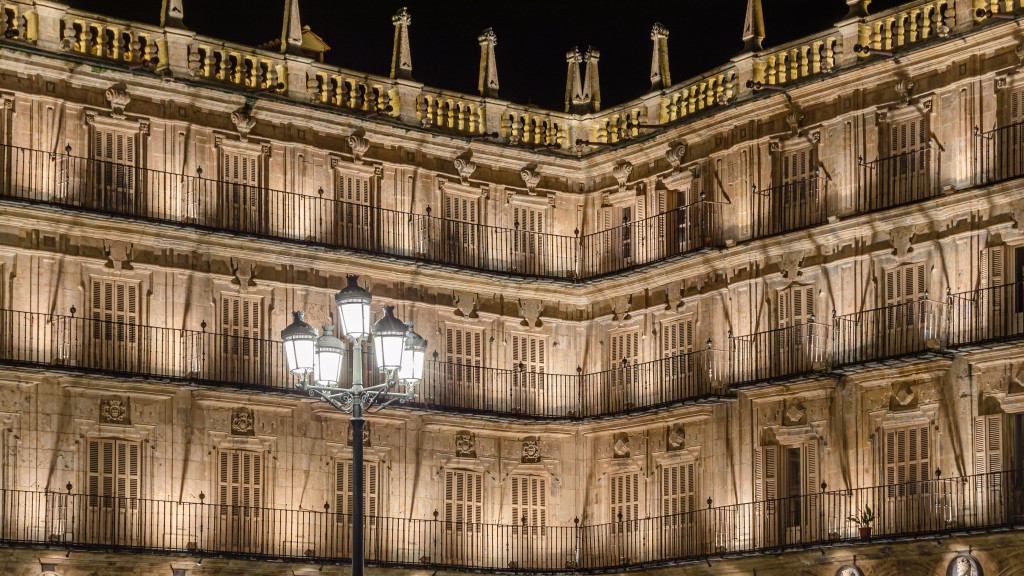
Elegant, harmonious, and always full of life, the Plaza Mayor (Main Square) is one of the city's icons and one of the most beautiful Baroque squares in Spain.
- Its arcades house historic cafés and traditional restaurants.
- It is a meeting point for both students and visitors.
- At sunset, the lighting highlights the golden tone of the stone... an unmissable spectacle.
➤ University of Salamanca: history and legend
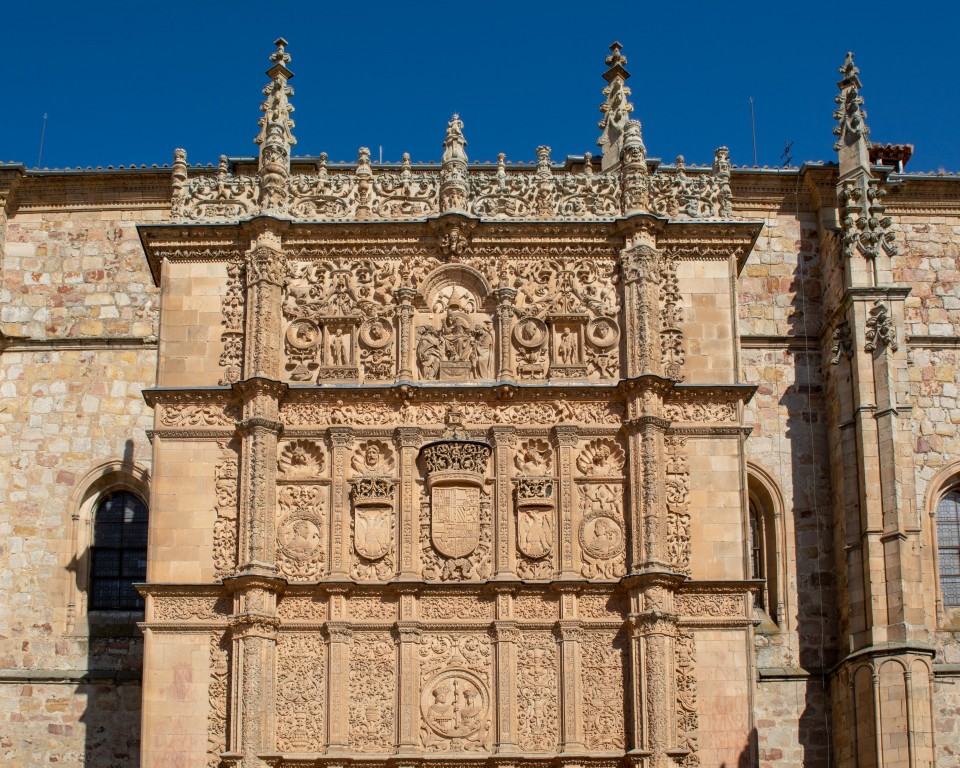
Founded in 1218, it is the **oldest continuously operating university in Spain** and one of the most prestigious in Europe. Its Plateresque façade is a Renaissance masterpiece.
- The frog hidden on the façade: finding it is a mandatory tradition.
- Patio de Escuelas (Schools Courtyard): historical setting of university life.
- Ancient Library (Biblioteca Antigua): contains fascinating manuscripts and historical collections.
A symbol of knowledge and the intellectual character of Salamanca.
➤ Cathedrals of Salamanca: Old and New
One of the most surprising features of Salamanca is that it possesses two cathedrals joined together in a unique monumental complex.
- Old Cathedral (Catedral Vieja): Romanesque, with the impressive Tower of the Cock (*Torre del Gallo*) and the main altarpiece by Nicolò Delli.
- New Cathedral (Catedral Nueva): a blend of Gothic and Baroque styles, imposing and luminous.
- A visit to the **towers** (Ieronimus) offers spectacular views of the city.
An essential tour to understand the city's religious and architectural heritage.
➤ Casa de las Conchas: symbol of the Salamancan Renaissance
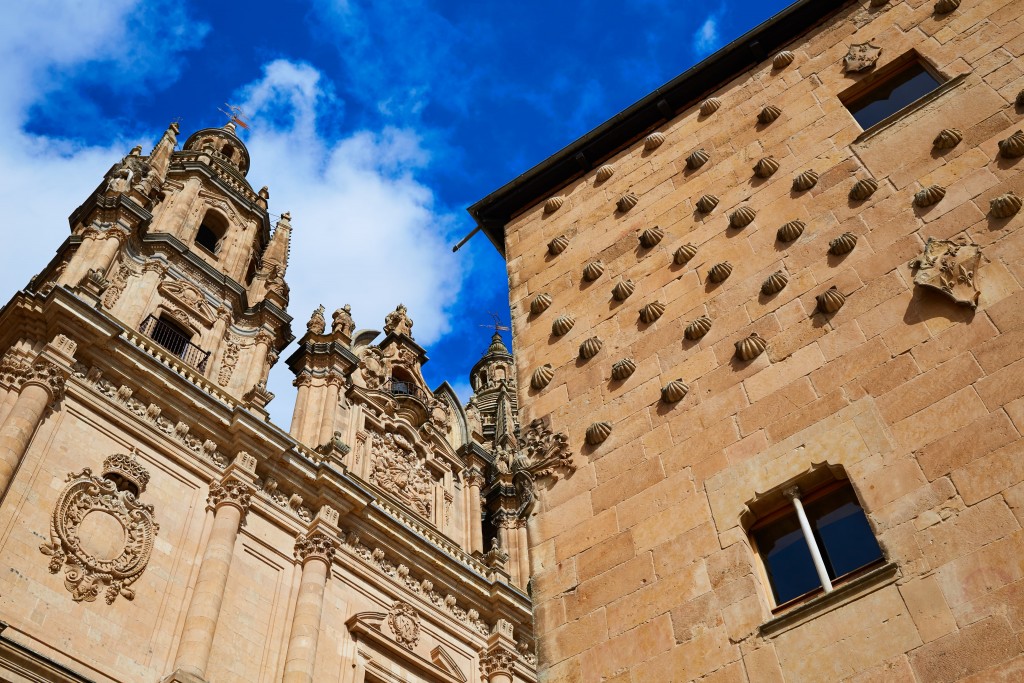
This emblematic building, decorated with more than 300 scallop shells, is one of the most photographed palaces in the city. Today it houses a public library.
- A unique example of the union between Late Gothic style and Plateresque elements.
- Legend has it that the shells hide a family treasure.
- The view of the Clerecía right opposite is a perfect postcard.
➤ La Clerecía: Baroque monumentality
Just opposite the Casa de las Conchas stands the Clerecía, the former Royal College of the Holy Spirit, an impressive Baroque construction with viewing towers.
- Scala Coeli: climb to the towers for one of the best views of Salamanca.
- Monumental and sober interior, full of architectural details.
➤ Convent of San Esteban: a stony altarpiece
The Convent of San Esteban, belonging to the Dominican order, stands out for its spectacular Plateresque façade, considered one of the most beautiful in Spain.
- Cloister of the Kings (*Claustro de los Reyes*), elegant and full of harmony.
- Historical link with Christopher Columbus, who sought support here for his project.
➤ Roman Bridge and Tormes riverside
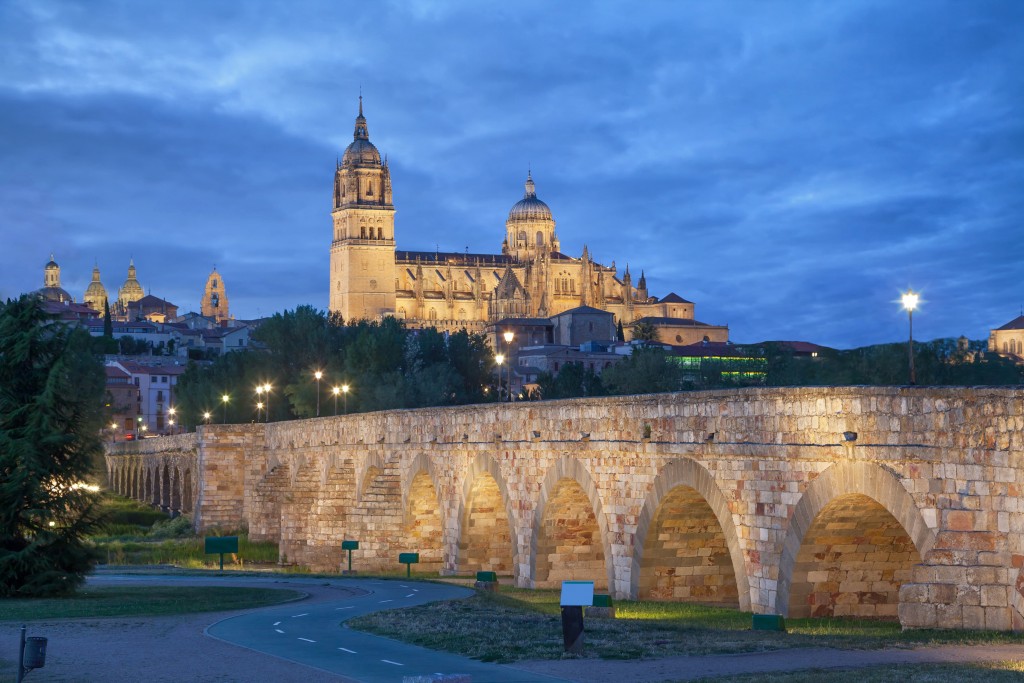
The Roman Bridge (Puente Romano), with more than two thousand years of history, is one of Salamanca's symbols. From it, you get a magnificent postcard view of the city and its cathedrals.
- Tranquil walks along the river.
- Perfect viewpoints for photography.
- Connection with the historic area and nature trails.
➤ Barrio del Oeste: urban art and modernity
In addition to its historical monumentality, Salamanca has a modern and creative side.
- Murals by local and international artists.
- Young atmosphere thanks to the university community.
- Alternative cafés, bookshops, and cultural spaces.
A perfect contrast to the more classical Salamanca.
➤ Salamanca: a city that mixes culture, art, and student life
Salamanca is not just monuments: it is also atmosphere, tradition, and youth. Its streets are full of life, with students from all over the world, coffee shops, small shops, historic bookshops, and gastronomy with its own identity.
A city that is enjoyed day and night, and that combines heritage, history, and contemporary energy like few others.