
Travelling through Galicia by train: an Atlantic route among historic cities, lighthouses and estuar
Travelling by train through Galicia: an Atlantic route between historic cities, lighthouses and rías
Galicia has established itself as one of the most attractive destinations for travellers seeking a slow-paced, cultural journey closely connected to the landscape. In contrast to the fast-paced tourism of other destinations, the Atlantic north offers a different way of travelling: exploring historic cities, fishing ports and green landscapes following the rhythm of the train.
Rail connections between A Coruña, Santiago de Compostela and Vigo make it possible to discover some of Galicia’s most emblematic areas without needing a car, linking heritage, gastronomy and coastline through comfortable and relatively short journeys.
The rise of train travel across Spain has also increased interest in Atlantic routes combining urban experiences, nature and excellent cuisine. Galicia fits particularly well within this trend thanks to the proximity between cities and the diversity of landscapes appearing throughout the journey.
Why Galicia is one of the best destinations to explore by train
Travelling by train through Galicia makes it easy to access historic centres, seafront promenades and stations located within the cities themselves. This creates a far more comfortable experience for travellers who prioritise walking, enjoying the surroundings and avoiding long road journeys.
In addition, the landscape constantly changes from one stage to another. The Atlantic route crosses coastal areas, wooded landscapes, vineyards and cities marked by centuries of maritime and Jacobean history.
Short journeys and well-connected cities
One of the great attractions of this railway route is the proximity between destinations:
- A Coruña and Santiago de Compostela are less than one hour apart by train.
- Santiago and Vigo are connected in approximately one hour and a half.
- High-speed rail also facilitates direct connections with Madrid.
This allows travellers to spend more time discovering each city and less time on transfers.
A Coruña: lighthouses, galleries and Atlantic spirit
A Coruña is often one of the great surprises for travellers visiting Galicia for the first time. Its relationship with the ocean completely shapes the city’s character: urban beaches, a seafront promenade bordering the coastline and a port tradition still deeply present in everyday life.
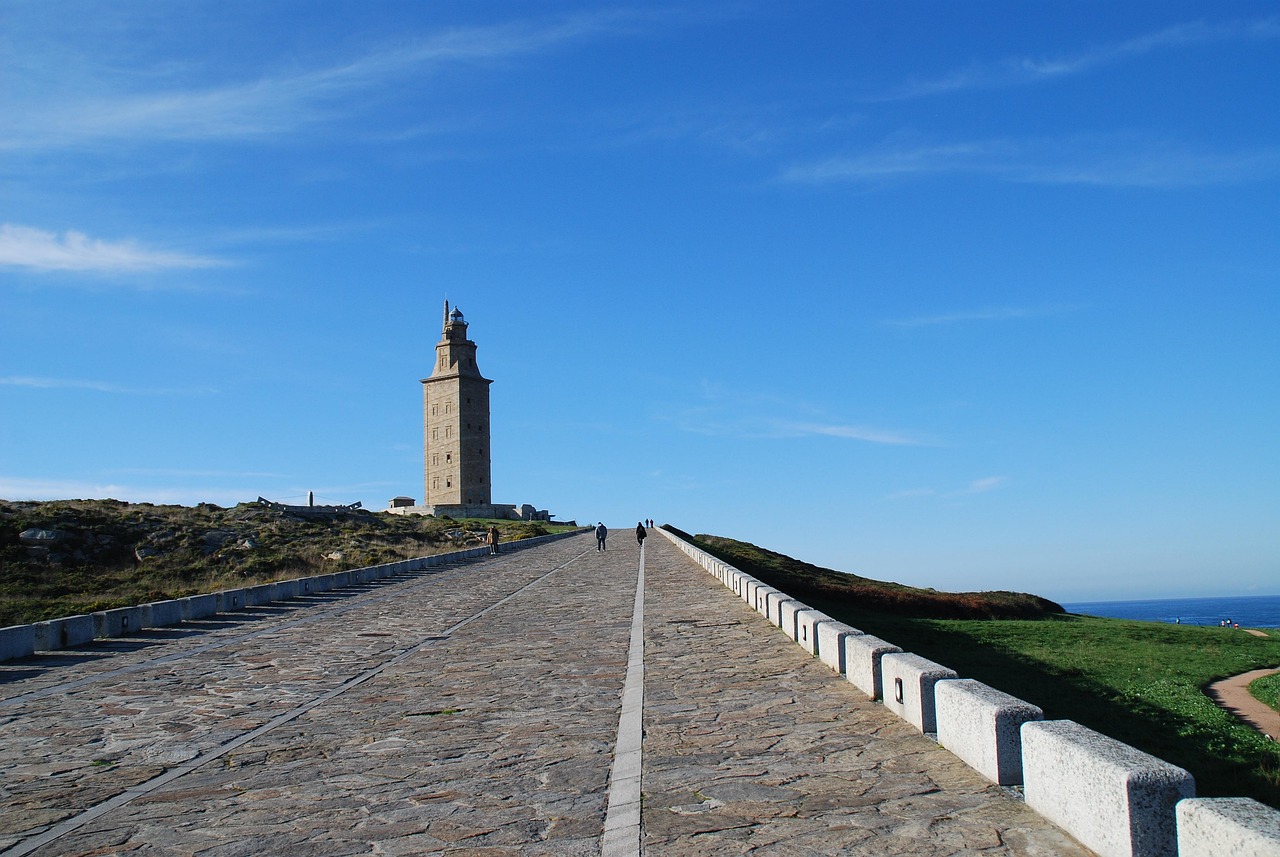
The Tower of Hercules, the oldest functioning Roman lighthouse in the world, has become one of the most recognisable symbols of northern Spain. From there, visitors can admire some of the most spectacular landscapes along the Galician coastline.
What to do in A Coruña during a getaway
- Explore María Pita Square and the historic centre.
- Walk alongside the glazed galleries facing the port.
- Visit the Tower of Hercules and the nearby cliffs.
- Enjoy fresh seafood and fish facing the Atlantic.
- Discover museums and scientific spaces by the sea.
Santiago de Compostela: history, stone and tradition
Talking about cultural tourism in Galicia inevitably means stopping in Santiago de Compostela. The city has preserved much of its medieval essence intact and remains one of Europe’s great historic centres.
The arrival of pilgrims from different countries coexists with university life and an increasingly recognised gastronomic scene. Walking through cobbled streets, passing beneath arcades and hearing the Cathedral bells form part of an experience deeply connected to Galician identity.
The Cathedral and the atmosphere of the historic centre
Beyond its religious significance, Santiago Cathedral represents one of Spain’s great architectural landmarks. Obradoiro Square, the historic convents and traditional markets turn every stroll through the centre into a cultural immersion.
It is also an excellent city for tasting local produce such as Galician cheeses, wines with denomination of origin and the classic Tarta de Santiago.
Vigo and the Rías Baixas: Galicia at its most maritime
In the final stage of the journey, Vigo introduces a different landscape. The city combines port activity, fishing tradition and a very direct connection with the Rías Baixas, one of Galicia’s most visited areas during spring and summer.
From Vigo, it is possible to explore Atlantic beaches, small coastal towns and wine regions linked to Albariño. It is also the main gateway to the Cíes Islands, considered by many to be one of the great natural treasures of the Spanish coastline.
Recommended experiences in the Rías Baixas
- Boat excursions to the Cíes Islands.
- Albariño tastings in traditional wineries.
- Gastronomic routes focused on seafood and mussels.
- Walks through fishing ports and coastal trails.
- Viewpoints overlooking the ría and Atlantic beaches.
Galician gastronomy as an essential part of the journey
One of the reasons many travellers choose Galicia is its cuisine. Local produce continues to play a leading role in markets, taverns and traditional restaurants.
On a railway route through Galicia, it is easy to combine cultural visits with gastronomic experiences linked to the sea: pulpo a feira, empanadas, oysters, mussels, fresh fish and seafood all form a regular part of the journey.
Galician wines also stand out, especially those from the Rías Baixas and other denominations of origin in northern Spain.
A peaceful and comfortable way to discover northern Spain
The train has become one of the preferred options for travellers wishing to explore Galicia without rushing and with greater comfort. Central stations, reduced waiting times and the possibility of admiring the landscape during the journey fit especially well with this type of Atlantic trip.
It also makes it possible to design more sustainable and relaxed cultural itineraries, something increasingly valued by travellers who prioritise authentic experiences over mass tourism.
Recommended experience for exploring Galicia by train
For travellers wishing to experience this route in an organised way, there is the proposal “Galicia by train: sea, history and legend from Madrid to the Atlantic”, a seven-day railway tour connecting A Coruña, Santiago de Compostela and Vigo with tickets, accommodation and cultural visits included.
The itinerary allows visitors to discover some of the most representative cities of Spain’s Atlantic north while combining historical heritage, coastal landscapes, Galician gastronomy and free time to explore each destination at their own pace.
An especially attractive alternative for cultural travellers seeking a different kind of getaway through Galicia without the need to drive and with the convenience of already organised rail journeys.