
The Romanesque Art of Castile and León
A territory that holds the greatest Romanesque treasure in Europe
Castile and León is one of the regions with the highest concentration of Romanesque art in the world. Among its mountains, plateaus, valleys, and historic cities, hundreds of churches, monasteries, hermitages, and sculptures dating from the 11th to the 13th centuries are preserved. It is a privileged territory for understanding the development of Romanesque in the Iberian Peninsula, both in its architecture, sculpture, and spirituality.
From the great cathedrals to the small rural temples, this heritage is an essential part of the identity of Castile and León and the European medieval legacy.
➤ A network of temples born with the Camino de Santiago
The rise of the Romanesque in Castile and León is closely linked to the Camino de Santiago (Way of St. James). From the 11th century onwards, the Jacobean route boosted the construction of churches and monasteries to host and spiritually guide pilgrims.
- San Martín de Frómista (Palencia): one of the purest and most perfect Romanesque temples in the world.
- Santo Domingo de la Calzada and San Juan de Ortega: key centres for walkers.
- Portals, capitals, and sculptures that narrate the Bible for a population that could not read.
The Camino was not only a spiritual route, but also a channel through which architects, artists, and new ideas arrived, enriching the art of the region.
➤ Cities with a Romanesque soul: Zamora, Soria, Palencia, and more
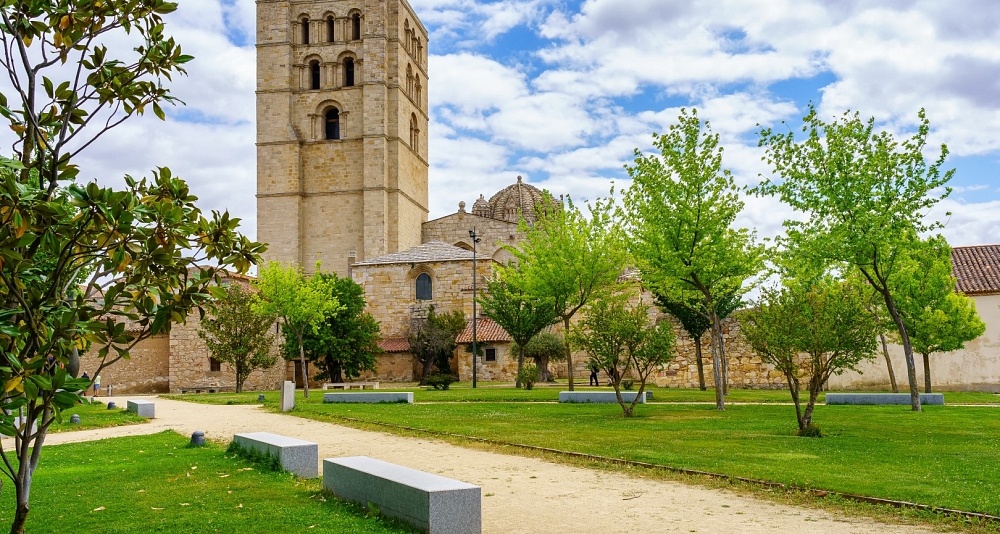
Some of the cities in Castile and León stand out for preserving an exceptional collection of Romanesque temples.
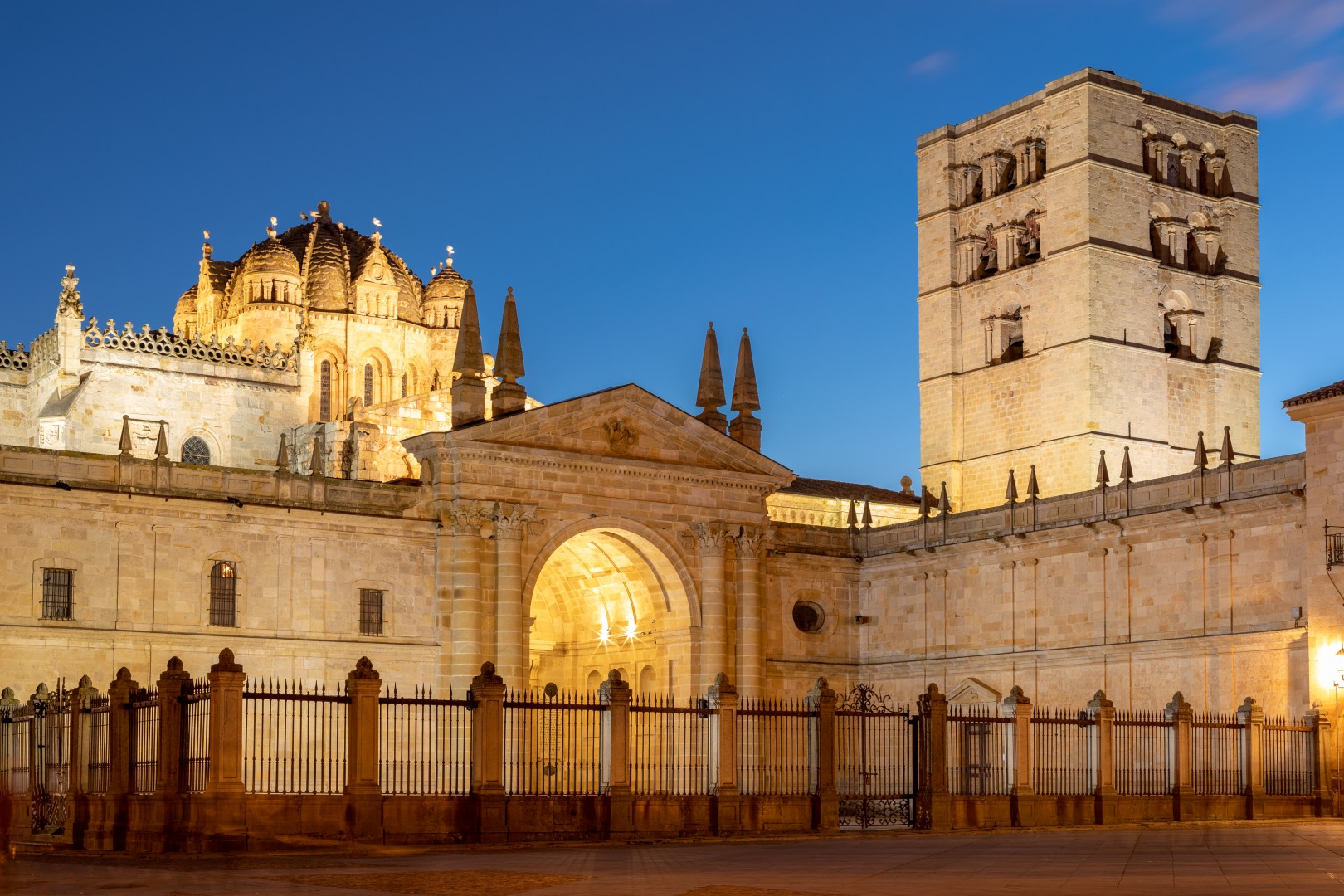
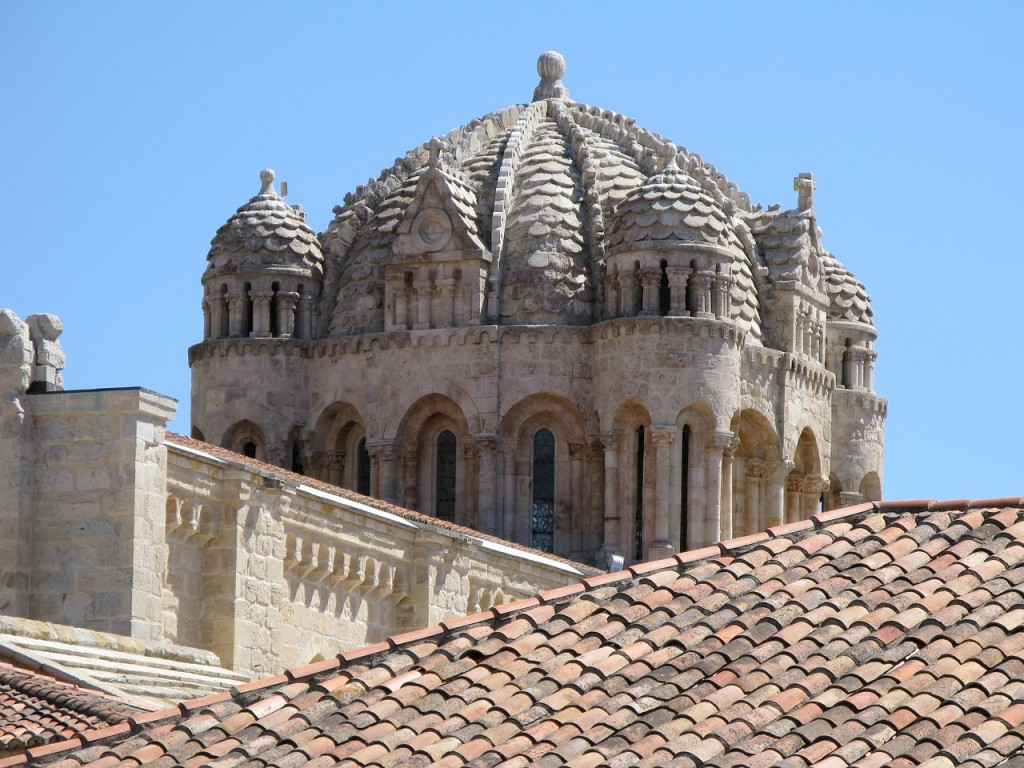
- Zamora: known as the “capital of the Romanesque”, with more than twenty medieval churches and a cathedral unique for its Byzantine-inspired scalloped dome.
- Soria: home to jewels such as San Juan de Duero and the Church of Santo Domingo, with spectacular portals.
- Palencia: birthplace of San Martín de Frómista and numerous beautiful rural temples.
- Burgos and Valladolid: although better known for their later Gothic style, they also preserve relevant Romanesque examples.
Each offers a different reading of the Romanesque: from Castilian sobriety to European-influenced sculptural details.
➤ Romanesque monasteries: spiritual and cultural centres
Monasteries were places of religious, political, and cultural power during the Middle Ages. Many still preserve their original Romanesque essence today.
- Monastery of San Isidro de León: considered one of the jewels of the late Romanesque.
- Silos (Burgos): its cloister is one of the most admired in all of Europe.
- San Pedro de Arlanza: birthplace of the County of Castile.
- Santa María la Real de Aguilar de Campoo: now home to the Museum of Romanesque Art.
These spaces were cultural drivers: they copied manuscripts, taught Latin, administered lands, and created works of art that still move us today.
➤ Romanesque sculpture: iconography that tells stories
One of the great charms of the Romanesque in Castile and León is its narrative sculpture. Artists carved scenes from the Bible, fantastic animals, human figures, and symbols that mixed the sacred and the everyday into stone.
- Vegetal capitals that blend classical tradition and Christian symbolism.
- Bestiaries with lions, snakes, griffins, and imaginary creatures.
- Historiated portals that explained biblical passages to the faithful.
- Repeated geometric motifs that gave rhythm and visual unity to the temples.
Its sober, compact, and expressive style defines the aesthetics of the Castilian Romanesque.
➤ The rural Romanesque: the most authentic essence
Beyond the major cities, Castile and León holds small treasures hidden in remote villages, hamlets, and valleys. There, Romanesque architecture has survived to the present day almost without alteration.
- Solitary hermitages on ancient roads.
- Small churches of enormous artistic value such as those in the Montaña Palentina or Tierra de Campos.
- Medieval bridges and remains of old pilgrim hospitals.
This rural Romanesque offers an intimate and silent experience, very different from the tourism of large cities.
➤ A heritage that is still alive
Today, Castile and León actively works to protect, restore, and disseminate its Romanesque heritage. Specialised museums, thematic routes, dramatised visits, and interpretation centres help to understand the importance of this millenary art.
Thanks to these initiatives, it is possible to follow routes such as:
- The Romanesque Route of Palencia (La Ruta del Románico Palentino).
- The Romanesque of the Duero (El Románico del Duero).
- The Romanesque of the Leonese Mountains (El Románico de la Montaña Leonesa).
- The Routes of the Camino de Santiago, where the Romanesque is the protagonist.