
The most important monuments of the Spanish Levante to discover its heritage
The most important monuments of the Spanish Levante: Mediterranean history among castles, cities and cultural heritage
The Spanish Levante is home to some of the most representative monuments of Spain’s Mediterranean coast. Roman, Islamic, medieval and modernist history has left behind a highly diverse monumental heritage stretching from major coastal cities to small towns with centuries of history.
Seaside castles, historic cathedrals, defensive fortresses and Mediterranean urban ensembles form part of one of Spain’s most visited cultural regions.
The City of Arts and Sciences in Valencia
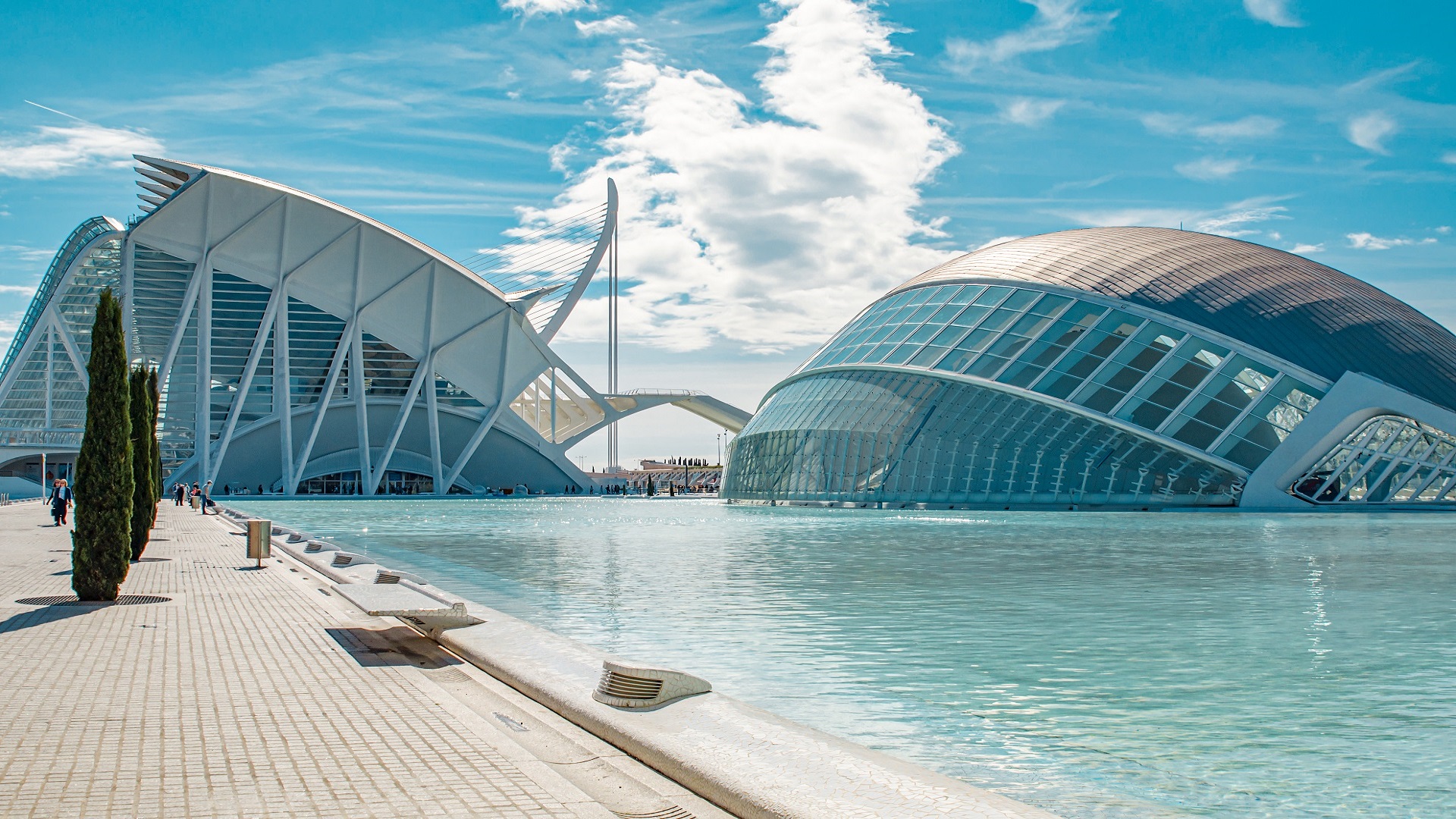
Although it is a contemporary complex, the City of Arts and Sciences has become one of the great architectural icons of the Spanish Levante and one of Valencia’s most recognisable landmarks.
Its combination of futuristic architecture, cultural spaces and modern urban surroundings has transformed it into one of the most visited places on Spain’s Mediterranean coast.
A symbol of contemporary Valencia
The complex brings together spaces dedicated to science, culture and leisure, while also becoming one of the city’s main tourist attractions.
Peñíscola Castle
Located on an impressive rocky peninsula facing the Mediterranean, Peñíscola Castle is one of Spain’s most spectacular coastal fortresses.
Built by the Knights Templar and also known for its connection to Pope Luna, it completely dominates the old town and the coastline of Castellón province.
One of the most photographed castles in the Mediterranean
Its walls, cobbled streets and sea views make Peñíscola one of the Levante’s most attractive historic destinations.
Valencia Cathedral and historic centre
Valencia Cathedral represents centuries of architectural evolution, blending Gothic, Baroque and Renaissance elements.
Among the most important historic spaces in its surroundings are:
- Plaza de la Virgen.
- The Silk Exchange.
- The Central Market.
- The Serranos Towers.
- The Carmen district.
Together, this ensemble forms one of the most interesting monumental areas of the Spanish Mediterranean.
The Silk Exchange
The Silk Exchange is one of Europe’s most important civil Gothic buildings and one of Valencia’s great historical symbols.
Built during the city’s Mediterranean commercial boom, it reflects Valencia’s economic importance over the centuries as a major trading port.
Santa Bárbara Castle in Alicante
Overlooking the city from Mount Benacantil, Santa Bárbara Castle is one of the most recognisable fortresses on the Levantine coast.
Its strategic position offers panoramic views over Alicante, the port and the Mediterranean.
A fortress between history and the sea
The castle brings together remains from different historical periods and stands as one of Alicante’s main tourist symbols.
The Roman Theatre of Cartagena
Cartagena preserves one of the most important Roman archaeological complexes on the Spanish Mediterranean coast. The Roman Theatre, discovered only a few decades ago, has become one of the great cultural references of south-eastern Spain.
The Murcian city also combines military, modernist and maritime heritage within a setting deeply linked to the Mediterranean.
The Palm Grove and historical heritage of Elche
Elche stands out for being home to the largest palm grove in Europe, a unique cultural landscape linked to the city’s agricultural and Andalusi heritage.
Alongside the Palm Grove, the historic centre and the Basilica of Saint Mary form part of one of the Levante’s most distinctive heritage ensembles.
The walls and coastal fortresses of the Mediterranean
Throughout the Levantine coastline there are numerous fortresses, defensive towers and walls built over centuries to protect Mediterranean cities.
Among the most famous are:
- The walls of Peñíscola.
- The fortresses of Cartagena.
- The coastal castles of Alicante.
- The defensive towers of the Valencian coastline.
- The former maritime defences of port cities.
The most visited monuments of the Spanish Levante
Every year, millions of travellers explore the Levante attracted by its combination of historical heritage, Mediterranean coastline and cultural cities. Among the most visited places are:
- The City of Arts and Sciences.
- Valencia’s Silk Exchange.
- Peñíscola Castle.
- Santa Bárbara Castle.
- The Roman Theatre of Cartagena.
- The Palm Grove of Elche.
The Spanish Levante, a journey between the Mediterranean and history
The Levantine monumental heritage reflects centuries of cultural and commercial exchanges linked to the Mediterranean. From Templar fortresses to modernist buildings and Roman remains, each city preserves an identity deeply connected to the sea.
For this reason, many tourist routes through the Levante combine cultural visits, Mediterranean gastronomy and coastal getaways that allow travellers to discover this part of Spain from both a historical and scenic perspective.