
The most important monuments in Galicia to discover its history and heritage
The most important monuments in Galicia: historical heritage among cathedrals, pazos and Atlantic landscapes
Galicia possesses one of the richest historical and monumental heritages in northern Spain. Roman, medieval and religious influences have left behind an architectural legacy that coexists with historic cities, centuries-old monasteries and fortresses linked to the Atlantic.
From Santiago de Compostela Cathedral to the Roman walls of Lugo or the stately pazos of inland Galicia, travelling through Galicia means discovering centuries of history in a region shaped by the sea, tradition and the Camino de Santiago.
Santiago de Compostela Cathedral
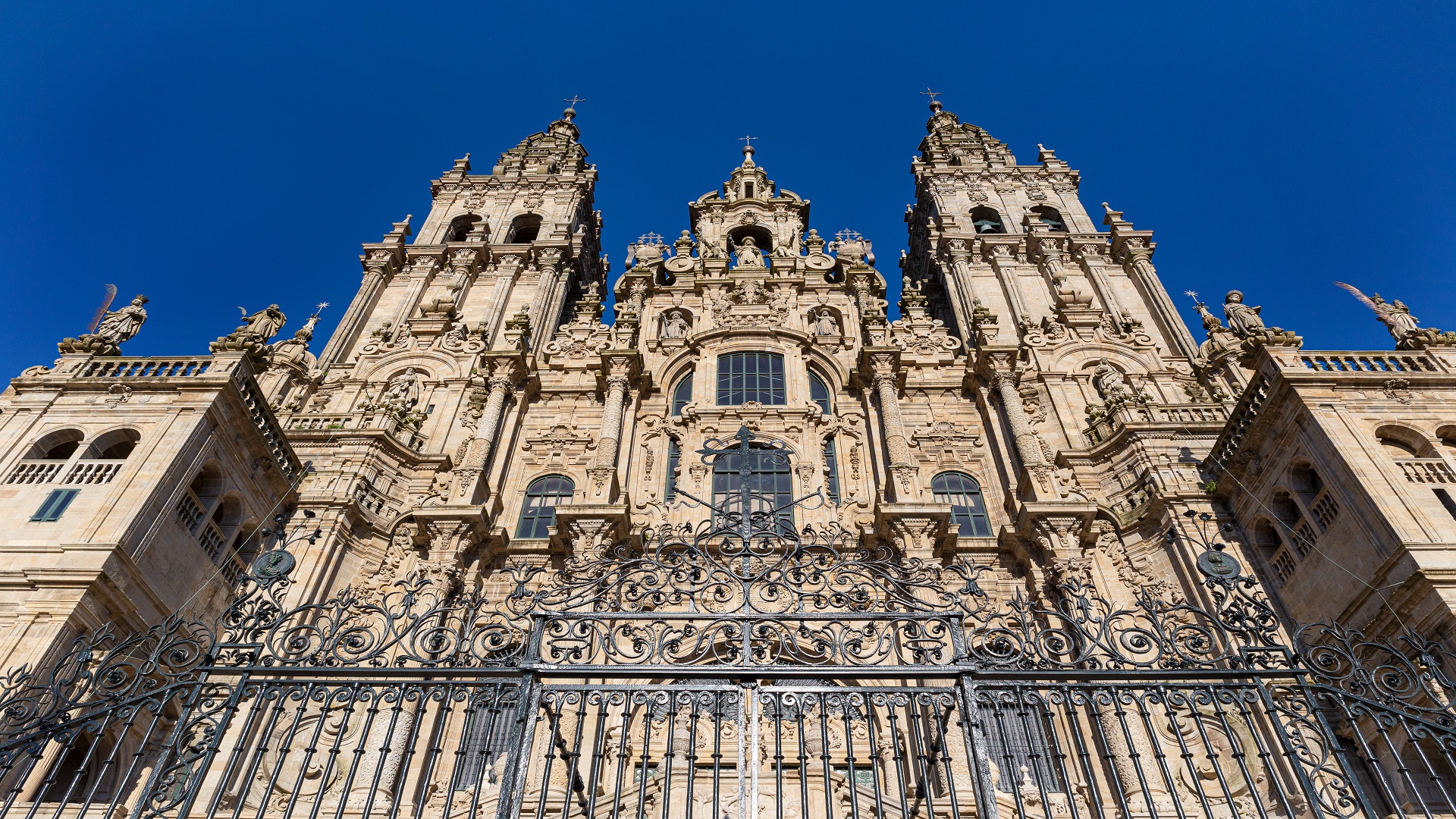
Santiago Cathedral is Galicia’s most emblematic monument and one of the world’s main pilgrimage centres. Thousands of travellers arrive every year at Obradoiro Square after completing the different routes of the Camino de Santiago.
Its impressive Baroque façade and the monumental ensemble surrounding it make Santiago’s historic centre one of the most important urban heritage sites in Spain.
The historical and spiritual heart of Galicia
Inside the cathedral, notable elements include:
- The Portico of Glory.
- The tomb of Saint James.
- The Botafumeiro.
- The panoramic rooftops and towers.
- The cloister and cathedral museum.
The Roman walls of Lugo
Lugo preserves the only Roman wall in the world that still maintains its entire original perimeter intact. Built between the 3rd and 4th centuries, it completely surrounds the city’s historic centre.
Walking along its more than two kilometres of walls is one of Galicia’s most distinctive heritage experiences.
One of the great Roman legacies in northern Spain
In addition to the walls, Lugo preserves other Roman remains and an important historic ensemble that reflects the significance of the ancient Lucus Augusti.
The Tower of Hercules in A Coruña
The Tower of Hercules is the oldest Roman lighthouse still in operation in the world and one of Galicia’s most recognisable symbols.
Located facing the Atlantic in the city of A Coruña, this historic construction combines heritage value with a spectacular natural setting.
A monument linked to the sea and Galician legends
For centuries, the tower has been associated with mythological stories and Galician maritime tradition, becoming one of the great cultural icons of the Atlantic coast.
The Monastery of San Estevo de Ribas de Sil
In the heart of the Ribeira Sacra lies one of Galicia’s most impressive monasteries. The Monastery of San Estevo de Ribas de Sil stands out for its historic architecture and the spectacular natural environment surrounding it.
The combination of religious heritage, river canyons and vineyards makes this area one of the most attractive cultural and scenic destinations in inland Galicia.
The Galician pazos
Pazos are an essential part of Galicia’s monumental heritage. These former rural stately residences reflect Galicia’s noble history and are usually surrounded by gardens, forests and traditional buildings.
Many of them are preserved in provinces such as Pontevedra, Ourense and A Coruña.
Stately architecture within the Galician landscape
In addition to their historical value, many pazos have been transformed into historic hotels, cultural spaces or stops along tourist routes.
Ourense Cathedral and historic centre
Ourense preserves one of the most interesting historic centres in inland Galicia. Its medieval cathedral combines Romanesque and Gothic elements and is one of Galicia’s major religious monuments.
The city also stands out for its thermal tradition and the historic bridges crossing the Miño River.
The historic centre of Pontevedra
Pontevedra has one of the best-preserved historic centres in Galicia. Its arcaded squares, churches and cobbled streets reflect the commercial and maritime importance the city held for centuries.
The urban transformation of recent years has also turned Pontevedra into a benchmark for sustainable urban tourism.
Galician monasteries and religious heritage
Galicia is home to numerous monasteries, churches and religious complexes spread across both historic cities and rural areas.
Among the most notable are:
- The Monastery of Oseira.
- San Martiño Pinario in Santiago.
- The monasteries of the Ribeira Sacra.
- The Romanesque churches of inland Galicia.
- The historic convents of Atlantic cities.
The most visited monuments in Galicia
Every year, millions of travellers explore Galicia attracted by its historical and cultural heritage. Among the most visited places are:
- Santiago de Compostela Cathedral.
- The Tower of Hercules.
- The Roman walls of Lugo.
- The monasteries of the Ribeira Sacra.
- The historic Galician pazos.
- The historic centres of Santiago and Pontevedra.
Galicia, a monumental destination between tradition and the Atlantic
Galician heritage combines spirituality, Roman legacy, medieval architecture and Atlantic tradition in one of Spain’s regions with the strongest historical identity.
For this reason, many cultural routes through Galicia include historic cities, monasteries, pazos and coastal landscapes that allow travellers to discover the cultural essence of north-western Spain.