
The most important monuments in Andalusia to discover its history and heritage
The most important monuments in Andalusia: history, art and great icons of southern Spain
Andalusia is home to some of the most impressive and visited monuments in Spain. Roman, Islamic and Christian heritage has left behind a unique monumental legacy that makes southern Spain one of Europe’s great cultural destinations.
From Nasrid palaces to monumental cathedrals, including medieval fortresses, historic cities and archaeological complexes, travelling through Andalusia means journeying through centuries of history and cultural blending.
The Alhambra of Granada
The Alhambra is the most famous monument in Andalusia and one of the most visited in Spain. Located on the Sabika hill, it overlooks the city of Granada with a monumental complex that reflects the splendour of the Nasrid kingdom.
Its palaces, courtyards, gardens and fortifications make this complex one of the great jewels of European Islamic architecture.
Among its most famous areas are:
- The Nasrid Palaces.
- The Court of the Lions.
- The Alcazaba.
- The Generalife gardens.
- The views over Granada and Sierra Nevada.
The Mosque-Cathedral of Córdoba
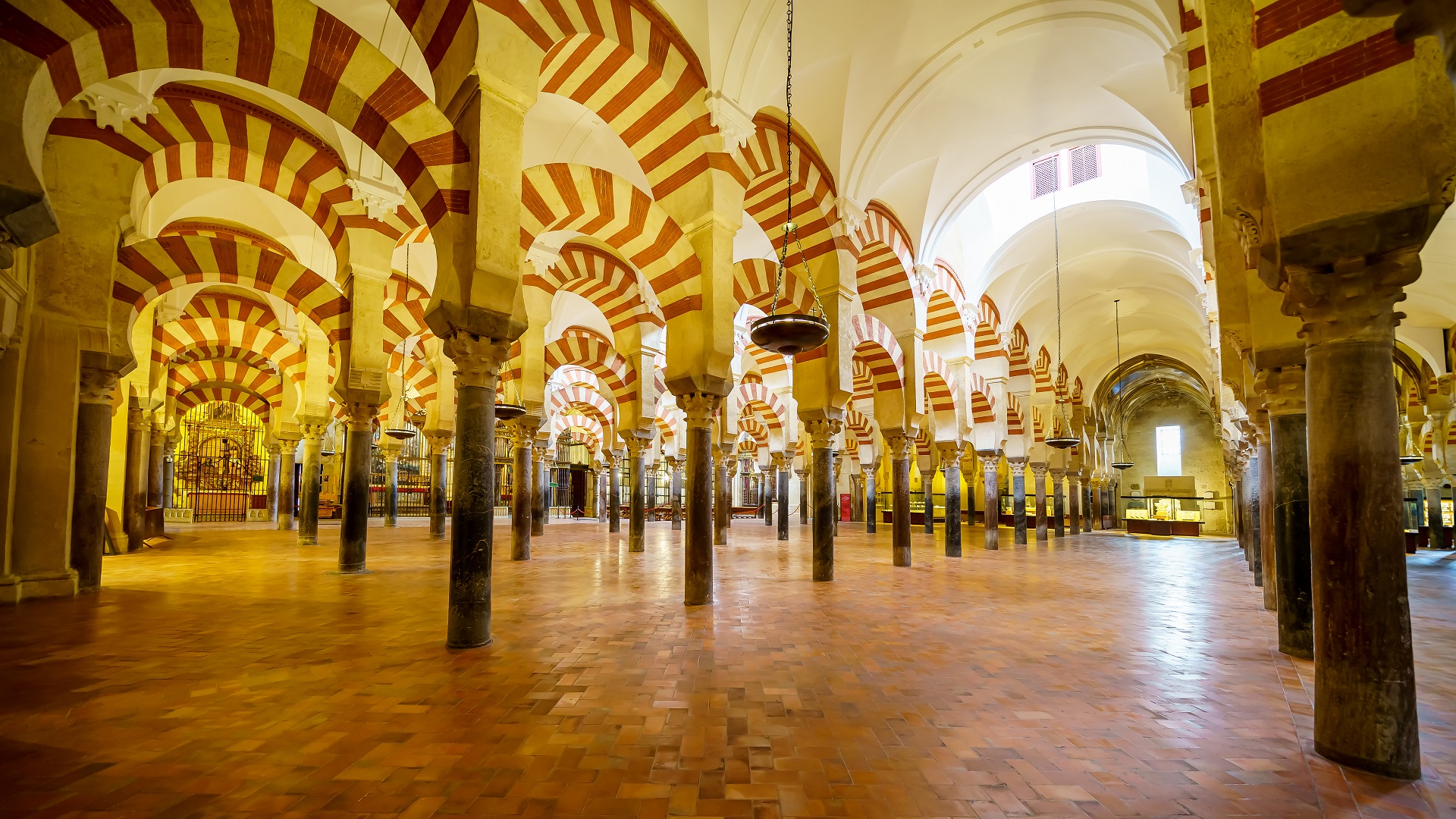
The Mosque-Cathedral is one of the world’s most remarkable monuments because of the architectural coexistence between Islamic and Christian heritage.
Originally built as a great Umayyad mosque, it was later transformed into a Christian cathedral after the conquest of Córdoba. Its forest of columns and two-tone arches has become one of the most recognisable images of Andalusia.
The great historical symbol of Córdoba
In addition to the monumental interior, the surroundings of the Jewish Quarter and Córdoba’s historic centre form part of one of Spain’s most important heritage areas.
The Royal Alcázar of Seville
The Royal Alcázar of Seville is one of the oldest royal palaces still in use in Europe. Its mixture of Islamic, Mudéjar, Gothic and Renaissance styles reflects centuries of architectural and cultural transformation.
Its decorated courtyards, gardens and palace halls make this monument an essential visit for travellers exploring the Andalusian capital.
A palace between history and cinema
Besides its historical importance, the Alcázar has served as a filming location for numerous international productions thanks to its monumental aesthetics and historic gardens.
Seville Cathedral and the Giralda
Seville Cathedral is one of the largest Gothic cathedrals in the world and one of Andalusia’s great architectural icons.
Built on the site of the city’s former main mosque, it preserves the Giralda, a former Islamic minaret later transformed into a Christian bell tower.
From the top of the Giralda, visitors can enjoy some of the best views of Seville’s historic centre.
The historic city of Úbeda and Baeza
The towns of Úbeda and Baeza in Jaén province represent one of Spain’s most important Renaissance ensembles.
Palaces, squares, churches and historic buildings make both towns a reference point for the Spanish Renaissance and an essential stop for travellers wishing to discover Andalusia’s monumental heritage beyond the major capitals.
The Alcazaba of Málaga
Málaga’s Alcazaba is one of the best-preserved Islamic fortresses in Andalusia. Located on a hill overlooking the port, it offers panoramic views of the city and the Mediterranean.
Its proximity to the Roman theatre and Gibralfaro Castle allows visitors to enjoy one of the most interesting historical routes along the Andalusian coast.
The archaeological complex of Itálica
Just a few kilometres from Seville lies Itálica, one of the most important Roman cities in Hispania.
Its amphitheatre, ancient streets and preserved mosaics reveal the historical importance of this settlement founded during Roman times.
The Roman legacy in Andalusia
Andalusia preserves numerous Roman archaeological remains, but Itálica stands out because of its state of preservation and the scale of its amphitheatre.
Cádiz Cathedral and Atlantic heritage
Cádiz is also home to one of the most recognisable monuments on the Andalusian coast. Cádiz Cathedral, with its characteristic golden dome facing the Atlantic, reflects the city’s commercial and maritime prosperity over the centuries.
The historic centre of Cádiz, almost entirely surrounded by the sea, completes one of the most distinctive urban experiences in southern Spain.
The most visited Andalusian monuments
Every year, millions of travellers explore Andalusia attracted by its historical and monumental heritage. Among the most visited places are:
- The Alhambra of Granada.
- The Mosque-Cathedral of Córdoba.
- Seville Cathedral and the Giralda.
- The Royal Alcázar of Seville.
- The Alcazaba of Málaga.
- The Renaissance towns of Úbeda and Baeza.
Andalusia, one of Europe’s great monumental destinations
Few European regions bring together such a diverse historical heritage as Andalusia. Islamic, Roman, Renaissance and Baroque legacies coexist in historic cities where every monument helps explain the complex history of southern Spain.
For this reason, many travellers choose organised cultural routes that allow them to explore several Andalusian cities in a single trip, combining iconic monuments, gastronomy and historical landscapes.