
The best gastronomy of Castile and León: tradition, roast meats and flavours steeped in history
The best gastronomy of Castile and León
Castile and León: a land of gastronomic tradition and quality produce
Castile and León possesses one of Spain’s most recognised and authentic gastronomies. Its cuisine is deeply connected to tradition, rural life and high-quality produce that has turned this region into a national gastronomic benchmark.
The combination of historical recipes, prestigious meats, artisanal cured meats, internationally recognised wines and cities with enormous cultural heritage makes Castile and León an ideal destination for travellers seeking authentic gastronomic experiences.
From traditional roast restaurants to contemporary establishments, Castilian-Leonese gastronomy maintains its own identity based on flavour, simplicity and respect for the produce.
➤ Roast milk-fed lamb: one of the great symbols of Castile and León
Talking about the gastronomy of Castile and León means talking about roast milk-fed lamb, one of the most emblematic dishes of Castilian cuisine.
- Aranda de Duero and Peñafiel are two of the great references for traditional roast lamb.
- Wood-fired ovens continue to form part of many historic roast restaurants.
- The simplicity of the recipe allows the produce to remain the true protagonist.
Roast milk-fed lamb has become one of the most sought-after gastronomic experiences for travellers visiting inland Spain.
➤ Cured meats and traditional products with their own identity
The livestock and rural traditions of Castile and León have given rise to some of the country’s most recognised cured meats and artisanal products.
- Guijuelo ham, one of the most highly valued in Spain.
- Morcilla de Burgos, the gastronomic symbol of Burgos province.
- Botillo del Bierzo, a traditional dish from León with deep popular roots.
- Artisanal cheeses, produced in different rural areas across the region.
Markets, traditional shops and local restaurants keep alive a gastronomic culture closely connected to the land.
➤ Castile and León and the culture of wine
Castile and León is also one of Europe’s great wine-producing regions. Its denominations of origin enjoy international recognition and form an essential part of the region’s gastronomic experience.
- Ribera del Duero, famous for its highly prestigious red wines.
- Rueda, a national benchmark for white wines.
- Toro, known for intense wines full of character.
- El Bierzo, increasingly recognised for the mencía grape variety.
Historic and modern wineries allow visitors to discover the close relationship between wine, landscape and gastronomy in Castile and León.
➤ Hearty stews and traditional Castilian cuisine
Castilian-Leonese cuisine also stands out for its hearty stews and traditional dishes connected to the climate and rural life.
- Castilian soup, one of the historical dishes of regional cuisine.
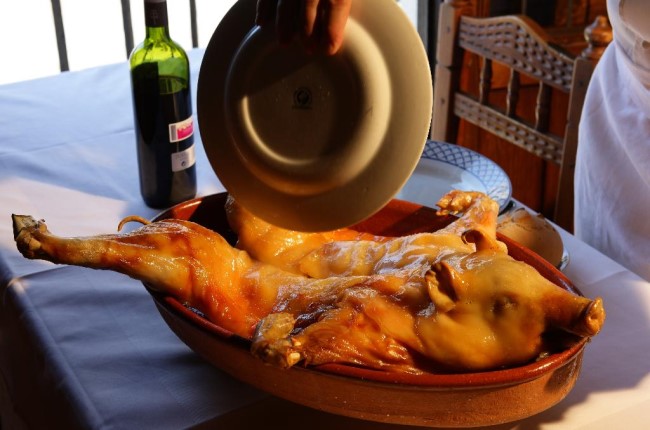
- Roast suckling pig, especially popular in Segovia.
- Judiones de La Granja, typical of Segovia province.
- Patatas a la importancia, a traditional recipe widely found across different provinces.
These recipes reflect a robust, traditional cuisine deeply connected to the history of Castile and León.
➤ Markets, tradition and local gastronomy
The cities and villages of Castile and León preserve traditional markets and historic shops where local produce continues to play a fundamental role.
León, Salamanca, Burgos, Valladolid and Segovia all have gastronomic districts where traditional bars, historic taverns and more modern culinary proposals coexist.
Gastronomy also forms part of many popular festivals and local celebrations throughout the region.
➤ Castile and León: heritage, wine and traditional cuisine
Eating in Castile and León also means exploring monumental cities, visiting underground wineries, discovering historic villages and enjoying a cuisine that has preserved much of its traditional essence intact.
The region offers an authentic gastronomic experience where produce, wine and tradition remain central.
Castile and León has established itself as one of the great gastronomic destinations of inland Spain thanks to the quality of its cuisine, the strength of its historical recipes and a culinary culture deeply connected to its identity.