
Road trip through medieval Castile: historic cities and gastronomy
Travelling through medieval Castile by car: a route between walls, cathedrals and historic flavours
Road trips through inland Spain are experiencing a surge in popularity among travellers looking for history, peaceful landscapes and cities with their own identity. Castile and León, together with historic enclaves in Castile-La Mancha and Madrid, offer one of the most complete cultural routes on the Iberian Peninsula: a succession of intact walls, monumental squares, Gothic cathedrals, stone villages and gastronomy deeply connected to the land.
Far from the fast-paced tourism of other destinations, travelling through medieval Castile allows visitors to explore at a relaxed pace, linking comfortable stages and cities that preserve centuries of history in their streets. From Toledo to León, passing through Segovia, Ávila, Salamanca, Zamora and Valladolid, the experience combines heritage, scenic roads and traditional cuisine.
Why Castile is one of the best destinations for a cultural road trip
The Castilian plateau brings together some of Spain’s most important historic cities within relatively short distances. This makes it possible to organise road trips with comfortable journeys, avoiding long driving days and allowing for unhurried visits.
Beyond the monumental heritage, the diversity of atmospheres makes each stage a different experience. Toledo blends Christian, Jewish and Andalusi heritage; Segovia impresses visitors with its Roman aqueduct; Ávila preserves one of Europe’s best-preserved medieval walls; Salamanca contributes a university atmosphere and golden stone; while Zamora and León display two of the country’s great Romanesque and Gothic legacies.
Driving along national roads and major routes crosses open countryside, vineyards, riverbanks and small historic towns that preserve the traditional character of inland Spain.
Essential cities on a medieval route through Castile
Toledo and the legacy of the Three Cultures
Built on a bend of the Tagus River, Toledo remains one of Spain’s most impressive historic cities. Its narrow streets, the Primate Cathedral and the silhouette of the Alcázar summarise centuries of cultural coexistence.
Exploring Toledo on foot allows visitors to discover hidden patios, historic synagogues and viewpoints with panoramic views over the city’s rooftops.
Segovia and the balance between Rome and Castile
The Roman aqueduct marks the entrance to a city where medieval urban planning remains intact. Segovia combines arcaded squares, historic churches and one of the country’s most recognisable alcázars.
In addition to its heritage, the city is one of Castile’s great gastronomic references thanks to its traditional roast suckling pig.
Ávila and its monumental walls
Few European cities preserve such a complete walled enclosure as Ávila. Walking alongside its stone ramparts allows visitors to understand the defensive importance of Castile during the Middle Ages.
The historic centre maintains a peaceful atmosphere, ideal for exploring convents, quiet squares and ancient granite palaces.
Salamanca and the historic university city
Plaza Mayor, the Cathedrals and the University make Salamanca an essential stop for travellers seeking cultural tourism in Spain. The city is especially striking at dusk, when the lighting highlights the golden tones of its sandstone buildings.
The university atmosphere also brings cultural life, gastronomy and activity throughout the year.
Zamora, León and Valladolid: Romanesque art, stained glass and courtly heritage
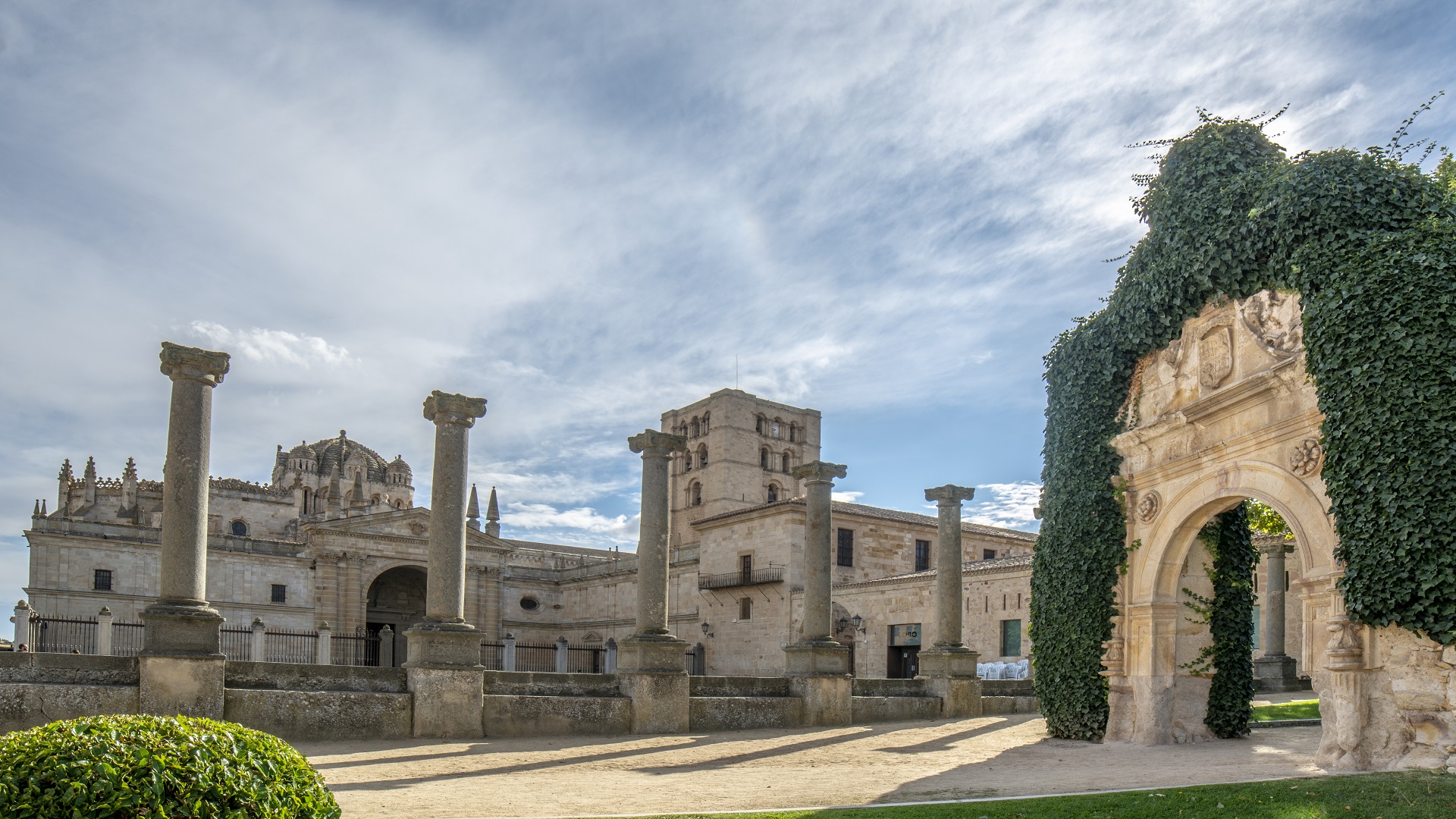
Zamora preserves one of Europe’s most important Romanesque ensembles, while León amazes visitors with the stained-glass windows of its Gothic cathedral and the traditional atmosphere of the Barrio Húmedo.
Valladolid completes the route with a combination of Renaissance architecture, museums and wine-making traditions linked to Ribera del Duero.
Castilian gastronomy: another way to understand the journey
One of the great attractions of travelling through Castile by car is the opportunity to discover traditional cuisine at every stage. The journey changes with each table: roast suckling pig in Segovia, roast lamb in Valladolid, cured meats in Salamanca, tapas in León or wines from Toro and Ribera del Duero accompany the route.
The historic cities of inland Spain still preserve traditional inns, old ovens and bars where gastronomy forms part of the cultural experience.
Tips for organising a road trip through Castile and León
- Planning shorter stages helps visitors enjoy the historic centres more fully.
- It is advisable to book accommodation with parking or use peripheral car parks in walled cities.
- Spring and autumn usually offer the best temperatures for exploring the plateau.
- Many cities allow visitors to discover their main monuments on foot.
- Gastronomic and wine tourism routes complement the cultural journey particularly well.
A recommended experience for discovering medieval Castile
For travellers wishing to explore the historical heart of Spain in an organised yet flexible way, the experience “Road trip through medieval Castile: art, history and flavour at every stage” offers a circular itinerary between Madrid, Toledo, Segovia, Ávila, Salamanca, Zamora, León and Valladolid.
The journey combines accommodation with breakfast, guided tours in historic cities and balanced driving times, allowing visitors to calmly discover some of the great monumental capitals of inland Spain.
Beyond the monuments, the route links plateau landscapes, historic squares, medieval districts and traditional gastronomy in a journey designed to enjoy Castile at a different pace.