
Murcia, Art, and Gastronomy
Murcia: a city where art and fine dining go hand in hand
Murcia is one of the most luminous, warm, and authentic cities in the Spanish Mediterranean. Capital of the Region of Murcia, it combines a surprising artistic heritage with a gastronomy deeply linked to the surrounding agricultural plain (*huerta*), known as the “orchard of Europe”. Its pleasant climate, cheerful character, and varied cuisine make Murcia a destination that captivates visitors from the very first stroll.
➤ Art and history in every corner of the historic centre
Murcia has an artistic identity especially marked by the Baroque and by great names in Spanish sculpture and architecture.
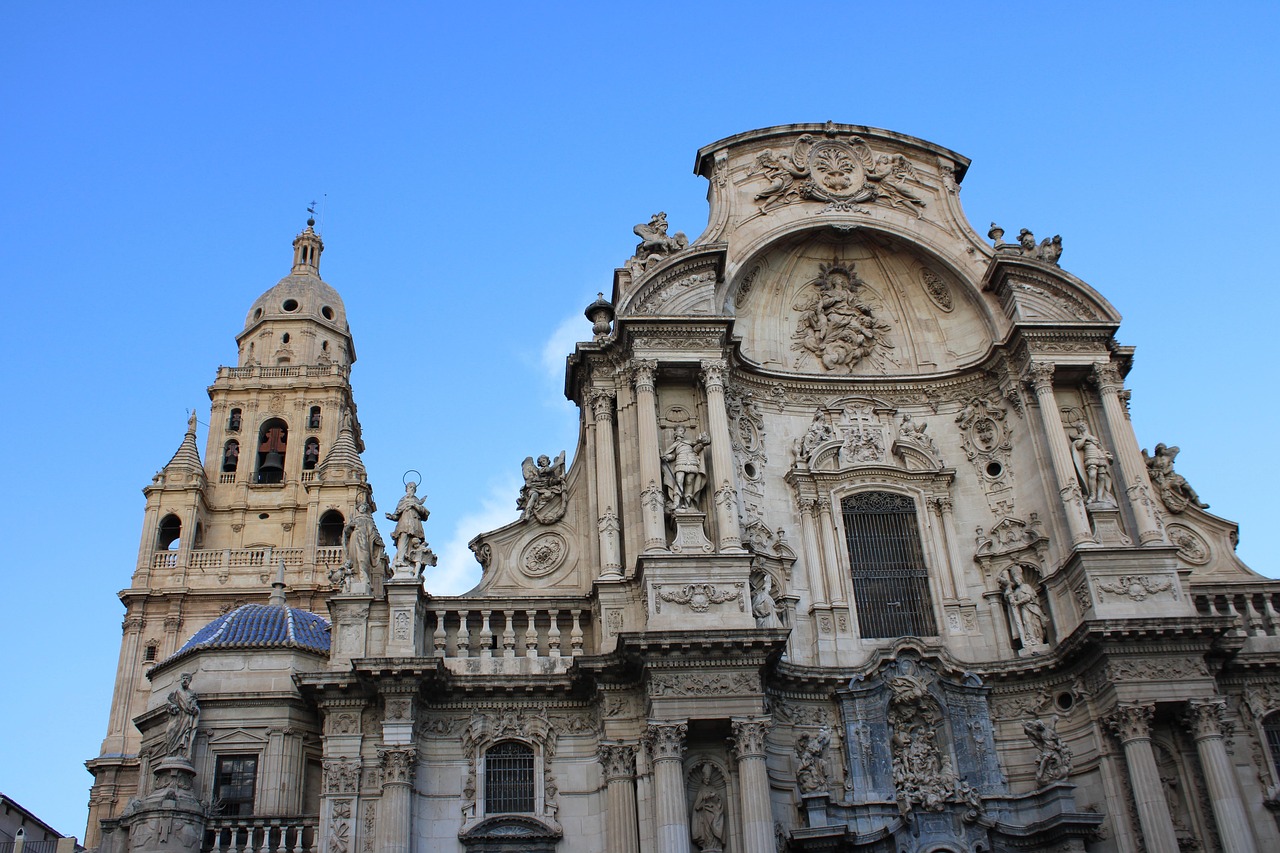
- Murcia Cathedral: a unique Baroque jewel, with a monumental façade designed by Jaime Bort and a tower that dominates the entire city.
- Real Casino de Murcia: spectacular eclectic building, a mixture of styles ranging from Neo-Arabic to Modernism.
- Plaza de las Flores (Square of the Flowers): one of the most lively and beloved spots by Murcians.
- Romea Theatre (Teatro Romea): cultural icon of the city.
Added to this is the legacy of Murcian sculptor Francisco Salzillo, whose religious and processional works are admired throughout the country.
➤ Salzillo and the Murcian sculptural tradition
Murcia is inseparable from the name of Salzillo, one of the great masters of the Spanish Baroque. His work has its own museum in the city, where processional floats from Holy Week (*Semana Santa*) and figures carved with extraordinary expressiveness are exhibited.
- Salzillo Museum (Museo Salzillo): an essential visit to understand the Murcian artistic identity.
- Murcia Holy Week (Semana Santa de Murcia): declared of International Tourist Interest.
The city breathes art and devotion in its streets, especially during spring.
➤ Murcian gastronomy: Mediterranean flavour and *huerta* produce
Murcian cuisine is one of the freshest, most colourful, and most aromatic in Spain. Based on the products of its fertile agricultural plain, it stands out for its simplicity and authenticity.
- Ensalada murciana (Murcian salad, or *moje*), made with tomato, egg, and tuna.
- Paparajotes: emblematic dessert made with battered lemon leaves.
- Zarangollo: courgette, onion, and egg cooked in the traditional style.
- Arroz caldero (Cauldron rice) from the Mar Menor.
- Marineras: an essential tapa made with Russian salad and anchovy on a ring-shaped biscuit.
Added to this are fruits and vegetables that come directly from the *huerta*: tomatoes, artichokes, peppers, broad beans, and citrus fruits of exceptional quality.
➤ Where to eat in Murcia: charming neighbourhoods and living gastronomy
Murcia has a very active gastronomic life, with traditional bars, family taverns, and contemporary proposals.
- Plaza de las Flores (Square of the Flowers): ideal for tapas, *marineras*, and typical dishes.
- Cathedral area: traditional restaurants and terraces.
- Santa Eulalia Quarter: young atmosphere and modern cuisine.
- Malecones (sea walls) and the **Segura river promenade**: varied options with pleasant views.
It is a perfect city for relaxed tapas or for enjoying excellent Mediterranean food based on local and excellent produce.
➤ Murcia: an experience full of culture, flavour, and tradition
Combining **art** and **gastronomy** in Murcia is easy: its historic centre invites you to stroll among Baroque monuments, sunny squares, and lively cafés, while its cuisine connects visitors with the fertile land that surrounds the city.
Murcia is, without a doubt, a perfect destination for those seeking history, a Mediterranean atmosphere, and gastronomy based on authentic flavour and excellent produce.