
The Historical Heritage of Córdoba
A city where a thousand years of history converge
Córdoba is one of the cities with the most historical heritage in Spain and Europe. Its old town, declared a World Heritage Site, reflects a unique coexistence of cultures: Roman, Jewish, Christian, and, above all, the splendid era of the Caliphate of Córdoba, which turned the city into one of the most brilliant intellectual centres of the medieval world.
Walking through Córdoba means delving into centuries of architecture, tradition, and art that blend among narrow alleyways, flowery patios, and monuments that have marked the history of the Mediterranean.
➤ The Mosque-Cathedral: an incomparable symbol of Al-Andalusian art
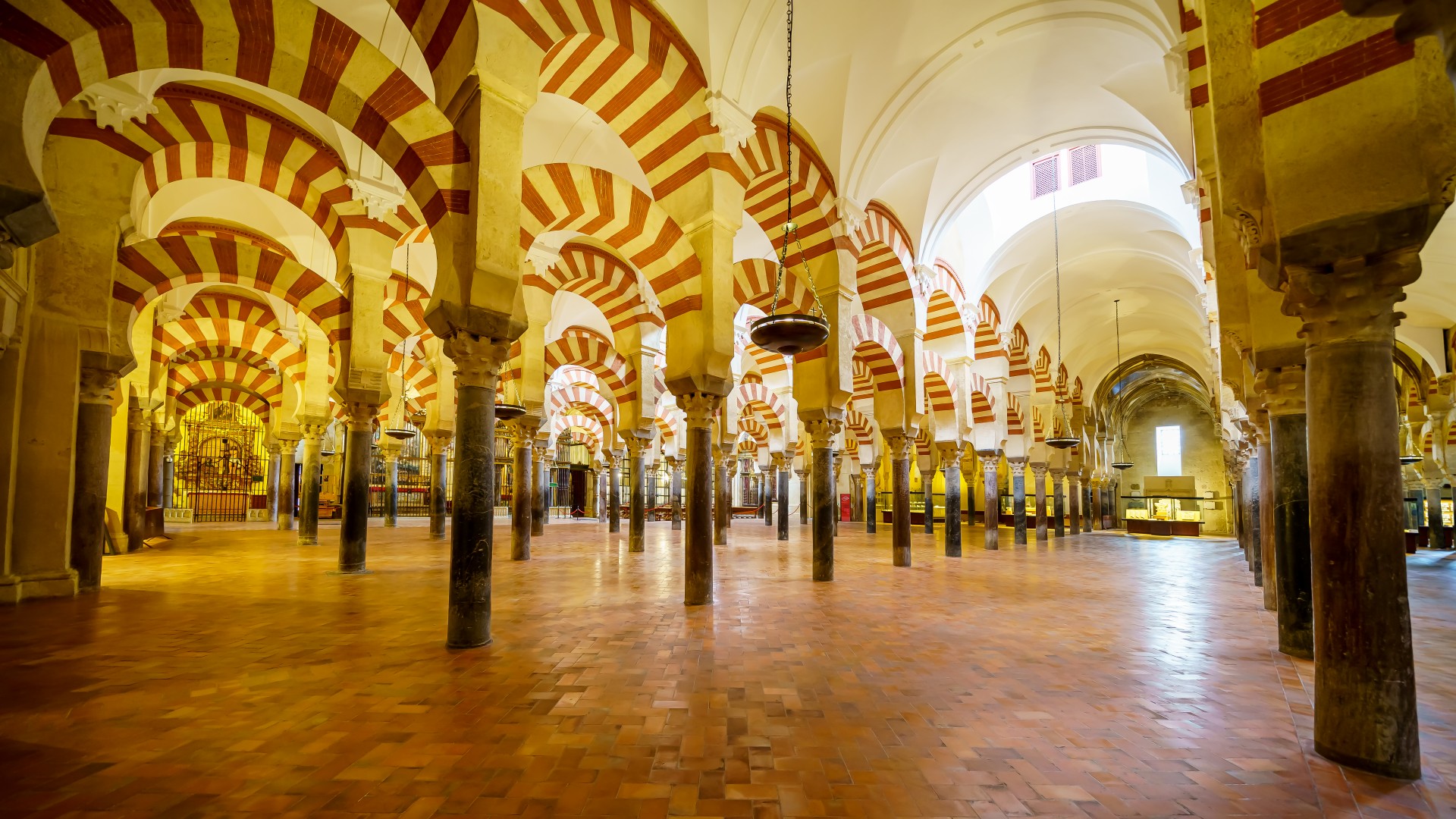
The most emblematic monument of Córdoba and one of the most impressive in Europe. The Mosque-Cathedral (Mezquita-Catedral) is a unique building where Islamic and Christian architecture coexist after the construction of the Renaissance transept inside.
- The forest of columns and two-tone arches, an icon of Umayyad art.
- The mihrab, a decorative jewel of marble and Byzantine mosaics.
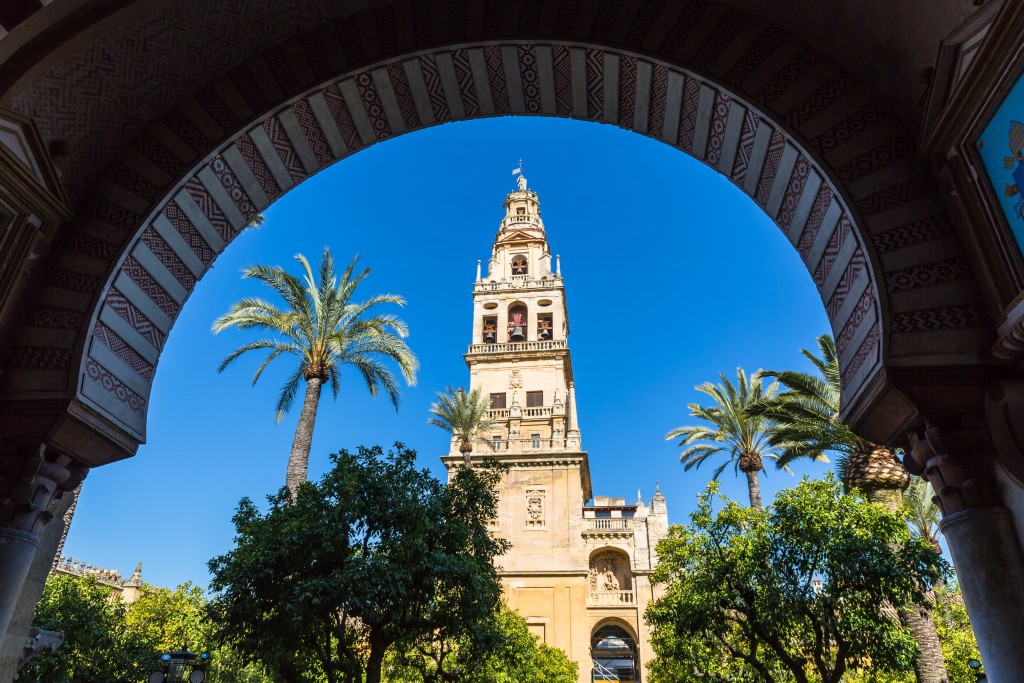
- The Patio de los Naranjos (Orange Tree Courtyard), heritage of the ancient Islamic *sahn*.
- The Cathedral, built starting in the 13th century right in the heart of the Mosque.
A monument that represents the coexistence, history, and evolution of the city itself.
➤ Alcázar of the Christian Monarchs: gardens and walls with centuries of history
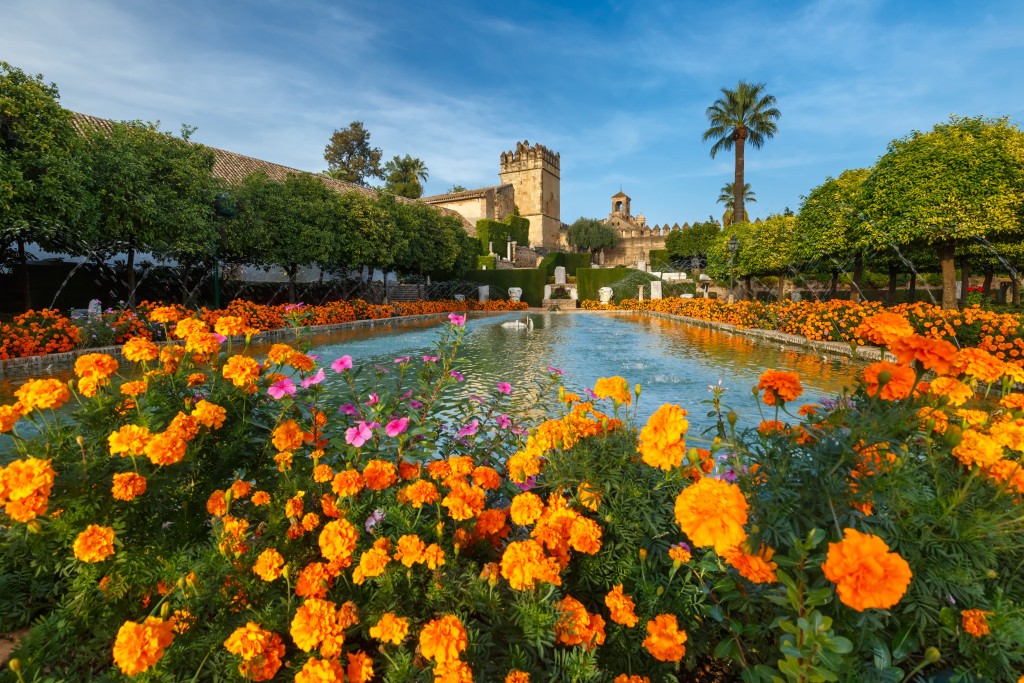
This medieval *alcázar* (fortress), built in the 14th century, was one of the residences of the Catholic Monarchs. Surrounded by defensive walls and towers, its interior houses gardens, fountains, and courtyards inspired by the Islamic tradition.
- Terraced gardens with ponds and orange trees.
- Torre del Homenaje (Tower of Homage) and panoramic views of the city.
- Sala de los Mosaicos (Hall of Mosaics), with Roman remains found in the city.
A place where military and palatial elements are combined with the aesthetics inherited from Al-Andalus.
➤ Jewish Quarter (Judería): Sephardic tradition in a medieval labyrinth
The Judería (Jewish Quarter) is one of the best-preserved medieval neighbourhoods in the country. Its narrow streets, tiny squares, courtyards (patios), and whitewashed houses preserve the memory of the Jewish community that lived here between the 10th and 15th centuries.
- Synagogue of Córdoba, one of the three medieval ones remaining in Spain.
- Calleja de las Flores (Alley of the Flowers), one of the most photographed corners of the historic centre.
- Zoco Municipal (Municipal Souk), with artisan workshops.
A neighbourhood full of history that invites you to explore it slowly.
➤ Roman Bridge and Calahorra Tower
Córdoba was born on the banks of the Guadalquivir river, and its Roman bridge—rebuilt in medieval times—is one of the city's oldest symbols. It connected Roman Córdoba with the Via Augusta.
- Roman Bridge (Puente Romano): 16 arches that connect the city with the south bank.
- Calahorra Tower (Torre de la Calahorra): a Muslim fortress that protected the entrance to the bridge.
- Spectacular views of the historic complex, especially at sunset.
An iconic space that summarises the Roman and Al-Andalusian heritage of the city.
➤ Medina Azahara: the palatine city of the Caliphate
Just 8 km from Córdoba is Medina Azahara, a palatine city commissioned by Caliph Abd al-Rahman III in the 10th century. Declared a World Heritage Site, it is one of the most important archaeological sites in Spain.
- Salón Rico (Rich Hall): a ceremonial space decorated with marble and *ataurique* (stylised vegetal) motifs.
- Terraces and gardens of the palatine city.
- Vestiges of what was once one of the most influential political centres in the Mediterranean.
An essential visit to understand the splendour of the Caliphate of Córdoba.
➤ Fernandine Churches: testimony to the Christian conquest
After the conquest of Córdoba by Ferdinand III, numerous churches were erected in the places where mosques had previously stood. The so-called Fernandine Churches (Iglesias Fernandinas) combine Mudejar and Gothic elements.
- San Nicolás.
- San Pablo.
- Santiago.
- San Pedro.
These temples allow us to understand the transition between the Islamic and Christian worlds in the city.
➤ Patios of Córdoba: living tradition and Intangible Heritage
The Patios of Córdoba (Patios Cordobeses) are a unique cultural heritage. Although most are private residences, the famous Patios Festival (Fiestas de los Patios), declared Intangible Heritage by UNESCO, is held in May.
- Whitewashed walls full of flowers.
- Fountains, wells, and traditional ceramics.
- Festive atmosphere and music.
A tradition that reflects the Mediterranean identity and the coexistence between cultures.