
Cádiz, the Silver Cup
A luminous city between the Atlantic and history
Cádiz, affectionately known as the Silver Cup (Tacita de Plata), is one of the oldest cities in the Western world. Founded by the Phoenicians more than 3,000 years ago, it preserves a unique historical heritage, an unmistakable light, and a friendly character that captivates those who visit it. Almost completely surrounded by the sea, the city combines maritime tradition, urban beaches, cultural life, and a charming historic centre.
➤ A millenary history facing the sea
In Cádiz, every corner tells a story. Its Phoenician, Roman, Arab, and Christian past has left traces that still mark its identity today. Furthermore, it was a key scene in the modern history of Spain: the Constitution of 1812, known as “La Pepa”, was signed here.
- Roman Theatre (Teatro Romano), one of the oldest and largest on the peninsula.
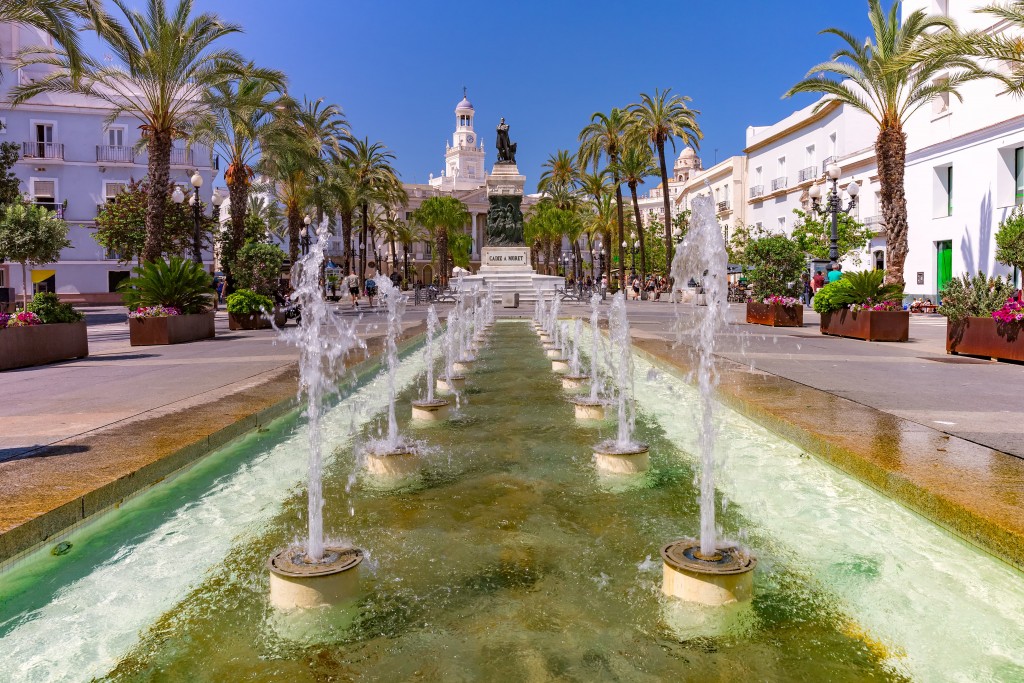
- Plaza de San Juan de Dios, the heart of the old town.
- Walls and bastions, which protected the city for centuries.
- Oratory of San Felipe Neri (Oratorio de San Felipe Neri), where the first Spanish liberal constitution was born.
A city that blends past and present naturally.
➤ The Cathedral: golden symbol of the Silver Cup
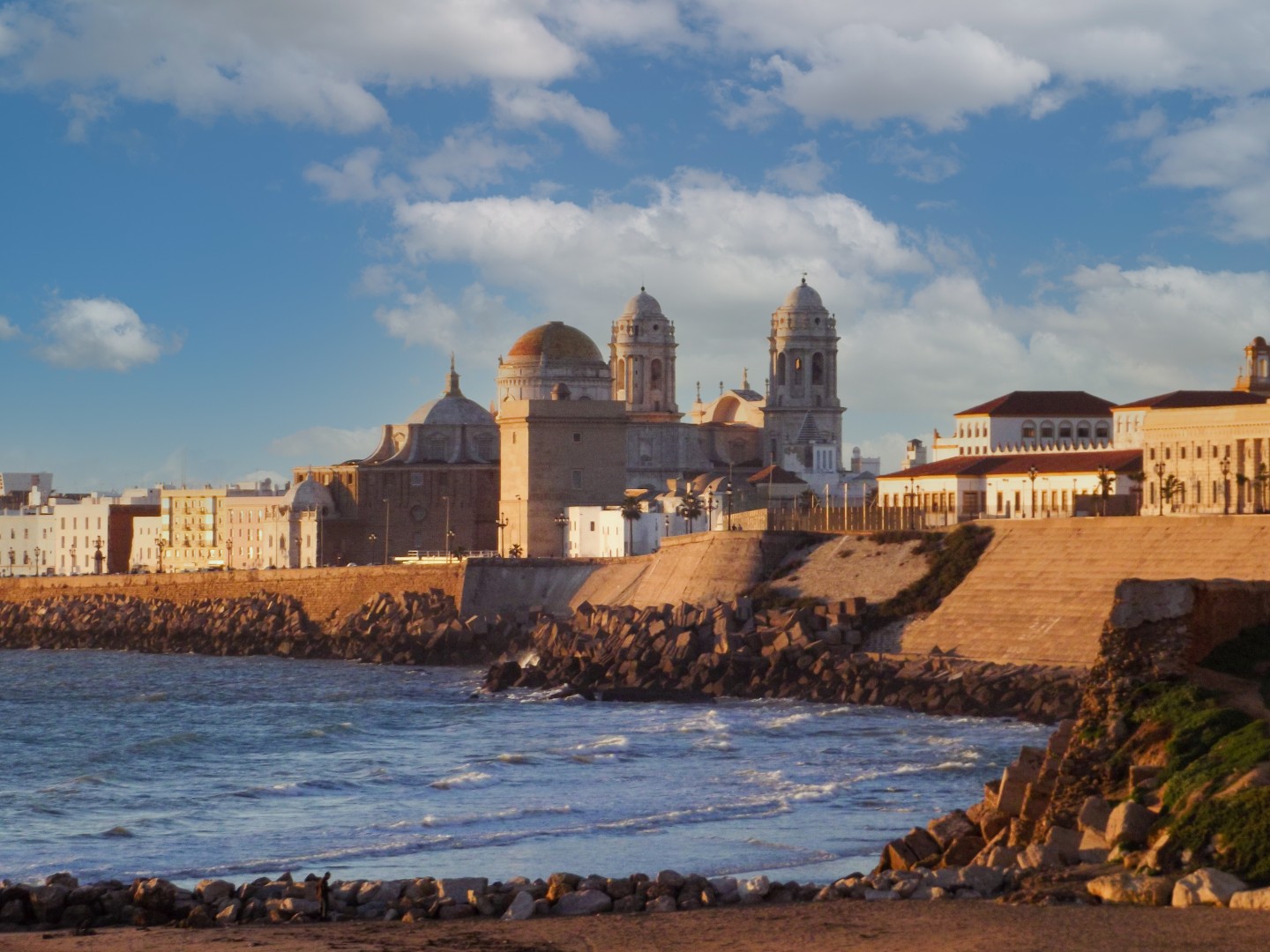
The **Cádiz Cathedral**, with its golden dome reflected over the Atlantic, is one of the most recognizable buildings in southern Spain. Its style mixes Baroque and Neoclassical, and its western tower offers one of the best views of the city.
- Golden dome visible from much of the promenade.
- Crypt where historical figures rest.
- Viewpoint tower with views of Cádiz's white rooftops.
An icon that reflects the elegance and brilliance of the city.
➤ Neighbourhoods with soul: La Viña, El Pópulo, and Santa María
Cádiz is a city for walking without rushing. Its most emblematic neighbourhoods preserve traditional life and the Gaditano essence.
- La Viña: a maritime quarter, famous for its taverns, carnival, and the nearby La Caleta Beach.
- El Pópulo: the oldest quarter, full of narrow streets, arches, and medieval remains.
- Santa María: the birthplace of flamenco in the city.
Getting lost in these neighbourhoods is discovering the most authentic Cádiz.
➤ La Caleta: the beach most loved by the people of Cádiz
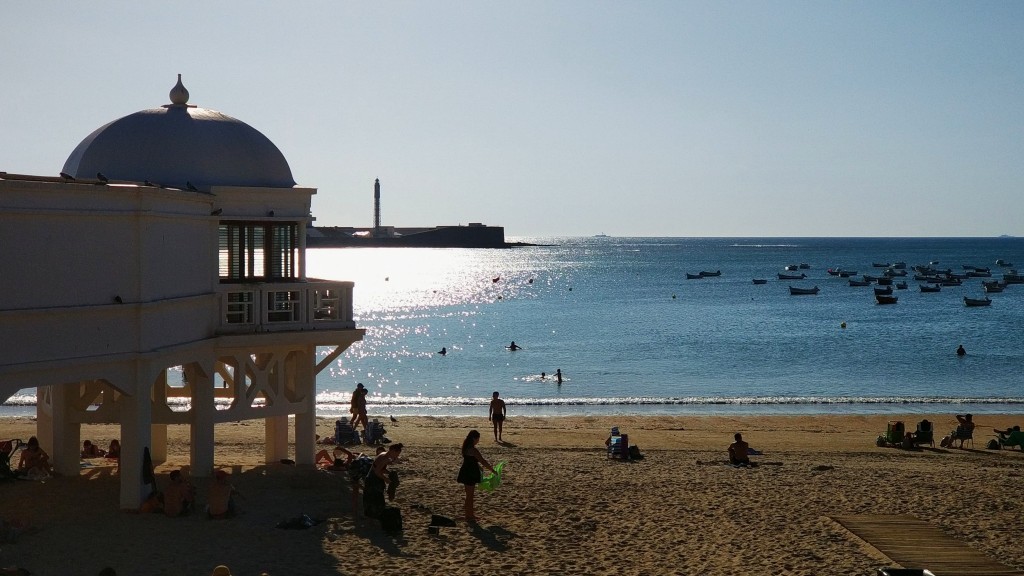
Located between two castles—San Sebastián and Santa Catalina—La Caleta is one of the most special urban beaches in Spain. Its local atmosphere, its history, and its sunsets make it a symbol of the city.
- San Sebastián Castle (Castillo de San Sebastián), connected by a romantic walkway along the sea.
- Santa Catalina Castle (Castillo de Santa Catalina), a defensive fortress with spectacular views.
- Sunsets considered among the most beautiful on the Atlantic.
A perfect setting to understand why Cádiz moves those who visit it.
➤ Gaditano Gastronomy: the flavour of the sea
Cádiz cuisine is fresh, simple, and deeply linked to the sea. Among the essentials:
- **Pescaito frito** (fried fish), from cuttlefish (*chocos*) to sole (*acedías*) or marinated dogfish (*cazón en adobo*).
- Tortillitas de camarones (Prawn fritters), crunchy and tasty.
- Red tuna (*Atún rojo*) from *almadraba* (traditional fishing method) in season.
- Fresh seafood and local wines.
The taverns of La Viña or the restaurants in the historic centre are ideal places to enjoy local gastronomy.
➤ A city to feel, not just visit
Beyond the monuments, Cádiz captivates with its light, its Atlantic breeze, its joy in the streets, and its leisurely pace. Its people, its carnival, its beaches, and its history make many visitors want to return.
The Silver Cup (La Tacita de Plata) is a city that shines with its own light, reflecting the simple elegance and energy of the Atlantic.