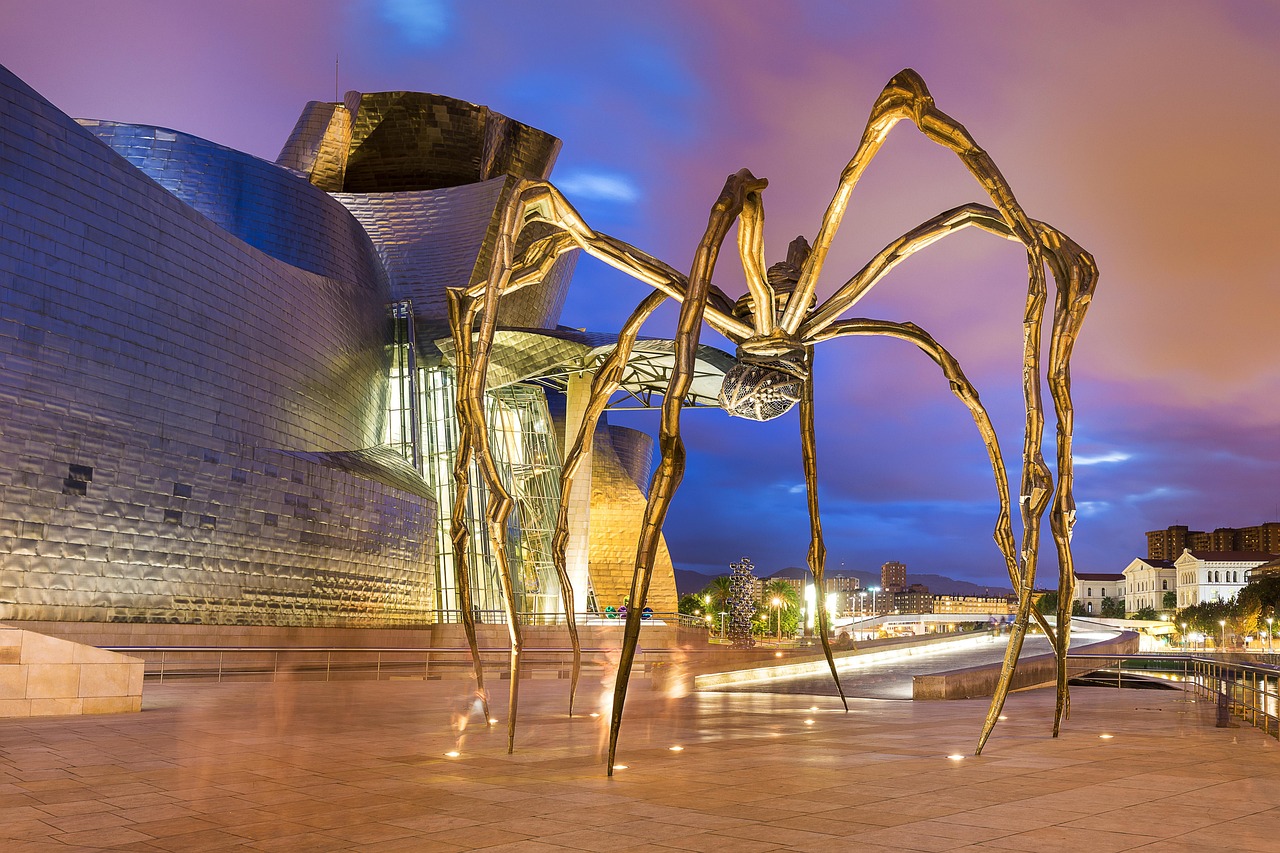

Bilbao and the Guggenheim
A city transformed by art and architecture
Bilbao is one of the best examples of how a city can reinvent itself through culture, design, and creativity. What was once a major industrial hub in northern Spain is today a vibrant, modern city full of life. Its change is largely due to the arrival of the Guggenheim Museum Bilbao, a global icon of contemporary art that completely transformed the city's image.
Bilbao combines Basque tradition, internationally renowned gastronomy, avant-garde architecture, and urban planning that has brought life back to its streets and the Nervión estuary (*ría*). It is an essential destination for lovers of art, culture, and cities with personality.
➤ The Guggenheim Museum: architecture that breaks the mould
Opened in 1997 and designed by architect Frank Gehry, the Guggenheim Museum Bilbao is one of the most recognisable buildings in the world. Its spectacular titanium structure, with undulating forms reminiscent of a ship or a giant sculpture, turned Bilbao into an international benchmark for contemporary architecture.
- Enormous exhibition spaces that allow for large-scale works.
- Permanent works such as Jeff Koons' "Puppy" or Louise Bourgeois' "Maman" (The Spider).
- Fish Gallery (Sala del Pez) and its fluid architecture.
- Temporary exhibitions of first-rate contemporary art.
The Guggenheim is not just a museum: it is a sensory experience that uniquely combines light, water, art, and space.
➤ The estuary promenade: urban design and outdoor life
The Nervión estuary is the backbone of Bilbao, and today it is a cultural, green, and lively space. Walking alongside the estuary allows you to enjoy a modern city that has successfully integrated architecture and landscape.
- Zubizuri Bridge: designed by Santiago Calatrava.
- Pedestrian promenades full of urban art and green areas.
- Isozaki Towers: a symbol of the new Bilbao.
- La Salve Bridge with its red arch, an icon of the skyline next to the Guggenheim.
The route connects cultural spaces, rest areas, viewpoints, and the museum area, making the stroll a perfect way to enjoy the city.
➤ Casco Viejo: the historical essence of Bilbao
The Casco Viejo (Old Town), known as the “7 Streets”, is the historical heart of the city. Its medieval streets, traditional shops, and lively squares contrast with the modernity of contemporary Bilbao.
- Santiago Cathedral: Basque Gothic in the historic centre.
- Plaza Nueva: the perfect place to enjoy pintxos.
- Mercado de la Ribera (Ribera Market): one of the largest covered markets in Europe.
- Small shops, bookshops, and authentic bars.
The Casco Viejo keeps the Bilbao identity and its welcoming character alive.
➤ Urban art, design, and cultural spaces
Bilbao is a city that breathes culture on every corner. In addition to the Guggenheim, it has numerous spaces dedicated to art, design, and music.
- Bilbao Fine Arts Museum (Museo de Bellas Artes de Bilbao): one of the most important art galleries in Spain.
- Azkuna Zentroa: cultural centre designed by Philippe Starck.
- Arriaga Theatre (Teatro Arriaga): Parisian inspiration on the banks of the estuary.
- Urban art and contemporary works scattered throughout the centre.
Bilbao's cultural scene is rich, diverse, and constantly evolving.
➤ Basque gastronomy: pintxos, tradition, and haute cuisine
Bilbao is a gastronomic paradise. From pintxos bars to signature restaurants, the city offers intense flavours, quality produce, and internationally renowned Basque cuisine.
- Pintxos in Plaza Nueva or the Casco Viejo.
- Bacalao al pil-pil (Cod in pil-pil sauce).
- Marmitako (Tuna and potato stew).
- Caramelised French toast (*Torrija caramelizada*) (local speciality).
Furthermore, Bilbao is close to some of the world's best restaurants, making it a first-class culinary destination.
➤ A perfect city for a cultural getaway
Bilbao is a city that surprises. Its modern architecture, its historical heritage, its gastronomy, its relationship with art, and its urban transformation make every visit different. And the Guggenheim Museum is, without a doubt, the symbol of this new Bilbao that looks to the future without forgetting its roots.
It is an ideal destination for a weekend break, a cultural trip, or a route through northern Spain.